

Last Updated on August 12, 2026
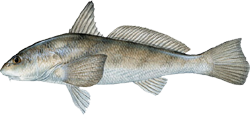
Whiting (Gulf Kingfish)
A species reference covering identification, habitat, diet, size, behavior,
similar species, and the whiting’s important place in Florida’s surf zone.
Menticirrhus littoralis · Family Sciaenidae
Whiting at a Glance
| Common Name | Whiting, Gulf Kingfish |
|---|---|
| Scientific Name | Menticirrhus littoralis |
| Family | Sciaenidae — Drums and Croakers |
| Habitat | Beaches, surf zones, sandy and muddy bottoms, inlets, bays, and estuaries |
| Maximum Length | About 19 inches |
| Typical Location | On or near the bottom |
| Diet | Marine worms, crustaceans, shrimp, and other small bottom-dwelling prey |
| Table Quality | Excellent |
What Is a Florida Whiting?
The fish Florida anglers commonly call a whiting is actually
a member of the kingfish group within the drum family. This profile focuses
primarily on the Gulf kingfish, one of the familiar bottom-feeding species
found along Florida’s coastline.
Rather than chasing prey near the surface, whiting spend much of their time
searching sandy and muddy bottoms for small crustaceans, marine worms, and
other food.
Whiting belong to the family Sciaenidae, which also includes
red drum, black drum, croakers, and several other familiar Florida coastal
species.
Whiting Identification
Gulf kingfish have a relatively slender, elongated body with muted gray to
grayish-brown coloration along the upper portion of the body and a lighter,
silvery underside.
Unlike some closely related kingfish species, Gulf kingfish generally lack
strong dark vertical bars across their sides.
The Chin Barbel
One of the easiest features to identify is the
single short barbel beneath the lower jaw.
This small whisker-like sensory organ helps the fish locate worms,
crustaceans, and other prey along the bottom.
If you’re trying to identify a Florida whiting, look underneath the lower
jaw. The small chin barbel is one of the most useful features to check.
Whiting or Kingfish?
The name “whiting” can be confusing because Florida anglers commonly use it
for several closely related kingfish species in the genus
Menticirrhus.
Depending on where you’re fishing, you may encounter Gulf kingfish,
southern kingfish, or northern kingfish.
| Species | Scientific Name | Common Identification Features |
|---|---|---|
| Gulf Kingfish | Menticirrhus littoralis | Generally plain gray or silvery sides without strong dark bars. |
| Southern Kingfish | Menticirrhus americanus | Often shows diffuse or irregular markings along the body. |
| Northern Kingfish | Menticirrhus saxatilis | Usually has more noticeable dark bars and distinctive markings toward the shoulder. |
How Big Do Whiting Get?
Whiting aren’t especially large fish compared with many other Florida
saltwater species.
Gulf kingfish can reach approximately 19 inches in length,
although many of the fish encountered by Florida surf anglers are smaller.
Their relatively modest size makes whiting particularly enjoyable on
light spinning tackle.
Whiting Habitat
Whiting are coastal bottom-dwelling fish strongly associated with sandy
and muddy environments.
Juvenile Gulf kingfish are especially common in the surf zone, which is one
reason they are such a familiar catch for Florida beach anglers.
Common Whiting Habitat
- Sandy beaches
- Surf zones
- Beach troughs
- Sandy coastal bottoms
- Muddy bottoms
- Inlets
- Bays
- Harbors
- Estuarine areas
Why Are Whiting Often So Close to Shore?
The surf zone may look rough, but it provides ideal feeding conditions for
whiting.
Breaking waves constantly disturb the sand, exposing tiny crustaceans,
worms, and other bottom-dwelling organisms.
Whiting can move through the shallow troughs running parallel to the beach
and feed on prey uncovered by the waves.
Whiting frequently feed much closer to the beach than anglers expect.
Long casts are not always necessary to reach them.
What Do Whiting Eat?
Gulf kingfish are primarily bottom feeders.
Their natural diet consists largely of small animals living in or just
above sandy and muddy bottoms.
Common Whiting Food Sources
- Marine worms
- Small crustaceans
- Shrimp
- Tiny crabs
- Other bottom-dwelling invertebrates
- Occasionally very small fish
Their natural feeding habits explain why shrimp, sand fleas, and other
crustacean-based baits are so productive for anglers targeting whiting.
Whiting Behavior
Whiting are considered demersal fish, meaning their lives
are closely associated with the bottom.
Their body structure, mouth position, feeding behavior, and sensory chin
barbel are all suited to searching the sand and mud for food.
Whiting often travel through beach troughs and other shallow coastal
depressions where waves and current continually expose potential prey.
Whiting and the Florida Surf Zone
Few Florida fish are as closely associated with surf fishing as whiting.
Florida’s sandy beaches provide the combination of habitat and food that
these fish prefer. Wave action moves sand, uncovers prey, and creates
troughs that whiting can use as natural travel corridors.
Because these troughs frequently run parallel to shore, whiting can move
up and down the beach while remaining within relatively shallow water.
This is why beach anglers should avoid assuming that fish are always
farther offshore.
Whiting Distribution
Gulf kingfish have a broad western Atlantic distribution and are well
established throughout Florida’s coastal waters.
Florida’s enormous amount of sandy shoreline provides extensive habitat
for the species on both the Atlantic and Gulf coasts.
The abundance of suitable surf-zone habitat makes whiting one of the more
accessible coastal species for Florida shore anglers.
What Is the Whiting’s Chin Barbel For?
The small projection underneath a whiting’s lower jaw is much more
important than it may appear.
The barbel functions as a sensory organ that helps the fish locate prey
while searching along the bottom.
This is particularly valuable in the surf zone, where waves can churn the
sand and reduce underwater visibility.
Instead of depending exclusively on sight, a whiting can use sensory
information to investigate the bottom for potential food.
Whiting Are Members of the Drum Family
Whiting belong to the Sciaenidae family, commonly known as
the drum and croaker family.
Other familiar Florida members of this family include red drum and black
drum.
| Classification | Whiting |
|---|---|
| Genus | Menticirrhus |
| Species | littoralis |
| Family | Sciaenidae |
| Common Family Name | Drums and Croakers |
Are Whiting Good to Eat?
Whiting are considered excellent table fare and have long been popular
with Florida shore anglers.
Their meat is generally:
- White
- Mild
- Delicate
- Light in flavor
Whiting can be prepared in several ways, including frying, baking,
pan-searing, and using the fillets in fish tacos.
Because the flesh is relatively delicate, avoid overcooking it.
Are Whiting Good Fighting Fish?
Whiting don’t produce the long, powerful runs associated with fish such
as snook, pompano, or jack crevalle.
However, they can provide surprisingly enjoyable action when caught on
appropriately light tackle.
Many anglers encounter whiting while using heavy surf equipment designed
for larger species. On lighter spinning tackle, even an average whiting
can provide an entertaining fight.
Why Whiting Are Great for Beginning Anglers
Whiting are one of the best saltwater fish for someone learning to fish
Florida’s coastline.
They’re relatively accessible, commonly found close to shore, and don’t
require highly specialized fishing equipment.
Learning to recognize and understand whiting also teaches beginners
important lessons about coastal fish behavior.
Whiting Can Help Anglers Learn
- How beach troughs work
- How bottom-feeding fish behave
- Why bait naturally collects in certain areas
- How surf conditions affect fish location
- How to identify similar saltwater species
Why Whiting Matter to Florida Shore Anglers
Whiting probably won’t receive the attention given to tarpon, snook,
redfish, or trophy pompano.
But as a Florida shore-fishing species, they’re difficult to overlook.
They’re accessible, commonly found in suitable habitat, excellent to eat,
and can be encountered without owning a boat.
Most importantly, the habitat they prefer is directly accessible to
anyone who can walk onto one of Florida’s sandy beaches.
For many anglers, whiting are one of the first saltwater species they
learn to catch consistently.
Comment here
You must be logged in to post a comment.