

Last Updated on August 11, 2026
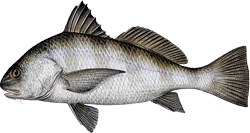
The black drum (Pogonias cromis) is one of Florida’s most recognizable and interesting inshore saltwater fish. Closely related to redfish, black drum are powerful bottom feeders that can grow to impressive sizes and are commonly found in waters accessible to shore anglers.
From bridges and docks to oyster beds and river mouths, black drum can be found throughout Florida’s coastal waters. They’re particularly appealing to shore fishermen because they don’t require complicated techniques to catch. Put the right natural bait near the bottom in an area holding drum, and you have an excellent chance of hooking one.
Black Drum Identification
Black drum change considerably in appearance as they mature.
Young black drum typically have a gray or silvery body marked by four to six dark vertical bars. These markings can make juveniles look somewhat similar to sheepshead, but the bars generally become less noticeable as black drum grow older.
Adult fish usually develop a darker gray, bronze, or nearly black coloration with a noticeably high, arched back.
One of the easiest ways to identify a black drum is to look underneath its lower jaw. Black drum have several short chin barbels, which resemble small whiskers. They use these sensitive barbels to help locate food along the bottom. Sheepshead don’t have these barbels, making this an easy way to distinguish the two species.
Black drum also have powerful teeth located farther back in their mouths that allow them to crush hard-shelled prey such as oysters and other shellfish.
How Big Do Black Drum Get?
Black drum are the largest members of the drum family, and they can grow much larger than many anglers realize.
According to the Florida Fish and Wildlife Conservation Commission (FWC), black drum can reach 67 inches in length. Florida’s state-record black drum weighed an impressive 96 pounds and was caught near Fernandina Beach.
The fish commonly encountered by Florida shore anglers are considerably smaller, but hooking a large black drum from a bridge, pier, or shoreline can result in a serious fight.
Black drum can also be surprisingly long-lived. FWC reports that they may live 35 years or longer.
Where Do Black Drum Live?
Black drum are primarily bottom-dwelling fish associated with Florida’s inshore and estuarine environments, although adults can also occur offshore.
Some of the best places to find them include:
- Bridges and bridge pilings
- Docks and piers
- Oyster beds
- River mouths
- Bays
- Lagoons
- Channels
- Inlets
- Estuaries
Juvenile black drum are particularly associated with estuaries.
For Florida shore fishermen, bridges and docks can be excellent places to start. Structure often holds the shellfish and crustaceans black drum naturally eat, while tidal current carries additional food through the area.
What Do Black Drum Eat?
Black drum are primarily bottom feeders with a diet that makes them perfectly suited to Florida’s estuaries.
Their natural prey includes:
- Oysters
- Mussels
- Crabs
- Shrimp
- Small fish
- Other bottom-dwelling invertebrates
Their powerful crushing teeth allow them to break apart shellfish that many other fish can’t easily consume.
You’ll often find black drum feeding around oyster beds, pilings, rocks, and other areas where crustaceans and shellfish are plentiful.
Best Baits for Black Drum
Because black drum rely heavily on crustaceans and shellfish, natural bait is usually the easiest way to target them.
Excellent black drum baits include shrimp, blue crabs, sand fleas, and cut bait. FWC specifically recommends keeping the bait close to the bottom because that’s where drum normally feed.
Fresh or live shrimp is an especially convenient option for shore anglers because it’s readily available at bait shops throughout Florida.
Crab can be an outstanding choice when specifically targeting larger drum.
Whatever bait you choose, presentation is important. You generally want the bait sitting naturally on or very close to the bottom rather than floating several feet above the fish.
Black Drum Fishing Tackle
You don’t necessarily need extremely heavy equipment to catch black drum.
The ideal setup depends on the size of the fish, current, and amount of nearby structure.
FWC notes that spinning or baitcasting equipment using 15- to 30-pound-test line is suitable for most situations.
From shore, a medium-heavy spinning rod paired with braided main line and a fluorocarbon leader provides a versatile setup.
Around bridges, oyster beds, rocks, and pilings, heavier leader material can provide valuable abrasion resistance.
A simple bottom rig is often all that’s required. Use enough weight to keep your bait near the bottom without unnecessarily overpowering the presentation.
Black Drum Behavior
Black drum belong to the drum family, a group of fish famous for their ability to produce sound.
They can create distinctive drumming noises using specialized muscles associated with their swim bladder. An angler handling a freshly caught drum may sometimes actually hear or feel these vibrations.
Black drum are also capable of forming schools, and discovering one fish can therefore be a good reason to continue fishing the same area.
Their spawning period occurs primarily during winter and early spring in nearshore waters.
Are Black Drum Good to Eat?
Smaller legal black drum can provide good table fare when properly handled and prepared.
Many anglers prefer smaller fish because their meat generally has a better texture than that of very large, older drum.
Large black drum are impressive sport fish, and releasing oversized fish is often the better option.
If you’re keeping a legal black drum, place it on ice quickly and clean it properly to maintain the quality of the meat.
Black Drum vs. Sheepshead
Juvenile black drum are sometimes confused with sheepshead because both can display prominent vertical black bars.
Fortunately, there’s an easy way to tell them apart.
Look at the mouth and chin.
Black drum have barbels underneath the lower jaw. Sheepshead do not. Sheepshead also possess very noticeable incisor-like teeth, while black drum lack those prominent front teeth.
As black drum mature, identification usually becomes much easier because their juvenile vertical bars fade and their bodies become substantially larger and darker.
Florida Black Drum Regulations
Check with FWC for current regulations
Black Drum Quick Facts
Scientific Name: Pogonias cromis
Family: Sciaenidae (drum family)
Habitat: Bays, estuaries, lagoons, river mouths, oyster beds, docks, bridges and nearshore waters
Diet: Oysters, mussels, crabs, shrimp, fish and other invertebrates
Maximum Length: Up to 67 inches
Florida State Record: 96 pounds
Lifespan: 35 years or more
Best Shore Baits: Shrimp, crab, sand fleas and cut bait
Black drum may not get quite as much attention as their redfish cousins, but they’re an excellent species for Florida shore anglers. They’re widespread, grow exceptionally large, fight hard, and can be caught from many places that don’t require access to a boat.
For anglers fishing Florida’s bridges, docks, inlets and estuaries, the black drum is definitely a species worth getting to know.