

Last Updated on August 24, 2026
Redfish are one of Florida’s most popular inshore game fish, and one of the great things about them is that you don’t need a boat to catch them.
Redfish can come within casting distance of anglers fishing from beaches, bridges, causeways, seawalls, docks, inlets, mangrove shorelines and wadeable flats. They can be caught on live bait, dead bait and artificial lures, and they’re available somewhere in Florida throughout the year.
But consistently catching redfish from shore requires more than casting a shrimp into the water and waiting.
The biggest key is learning where redfish are likely to feed.
Redfish are strongly associated with structure, current and food. Find oyster bars, grass edges, creek mouths, mangroves, bridge pilings, channels or beach troughs where moving water concentrates bait, and you’ve found the type of water worth fishing.
This guide covers everything you need to get started catching redfish from Florida’s shores, including where to find them, the best bait and lures, rigs, tackle, tides and seasonal strategies.
Redfish Quick Guide
| Category | Good Starting Point |
|---|---|
| Best habitat | Oyster bars, grass edges, mangroves, creek mouths and channels |
| Best live bait | Shrimp, finger mullet, mud minnows and pinfish |
| Best dead bait | Fresh cut mullet, shrimp and crab |
| Best artificial lures | Paddletails, spoons, jigs and topwater plugs |
| Best bait rig | Fish-finder/sliding-sinker rig |
| Shallow-water rig | Free-lined bait or popping cork |
| Best tide | Moving water around productive structure |
| Where to shore fish | Bridges, flats, beaches, inlets, causeways and seawalls |
| Best strategy | Find structure + current + bait |
Where to Find Redfish in Florida
One mistake new redfish anglers make is looking at a huge body of water and thinking the fish could be anywhere.
Technically, they could.
But they usually aren’t.
Redfish have reasons for being where they are.
They are looking for food while also taking advantage of depth, current and structure.
That means you can eliminate a tremendous amount of unproductive water before making your first cast.
Oyster Bars
Oyster bars are classic Florida redfish habitat.
Oysters create structure while also supporting crabs, shrimp, small fish and other food.
But don’t automatically cast directly onto the oysters.
Look for:
- Ends of oyster bars
- Deeper edges
- Small channels
- Pockets between oyster beds
- Points
- Current flowing around the structure
A redfish can position itself beside the oysters and let the current deliver food.
Oysters are extremely abrasive, so keep that in mind when choosing your leader and when fighting a fish.
Grass Flats
Shallow grass flats can be excellent redfish water.
Instead of looking at an entire flat as one fishing spot, look for something different.
Pay attention to:
- Grass edges
- Sandy potholes
- Channels
- Drop-offs
- Points
- Bait activity
If you’re wading, move slowly.
In shallow water, you may see redfish before you catch them.
Watch for wakes, nervous water and occasionally tails breaking the surface.
Creek Mouths
Creek mouths become especially interesting when water is moving.
Imagine a tidal creek draining a large area of flooded grass or mangroves.
Shrimp, minnows and other prey moving with that water eventually have to pass through a relatively small opening.
Redfish don’t need to chase food all over the flat if they can wait near that opening.
Fish:
- Both sides of the mouth
- The center of the current
- Current seams
- The deeper water immediately outside the creek
This is particularly useful on a falling tide.
Mangrove Shorelines
Mangroves provide excellent habitat for baitfish and crustaceans.
But again, look for differences.
A long, perfectly straight mangrove shoreline isn’t as interesting as:
Mangroves → point → small creek → pocket → deeper edge
Those transitions deserve your attention.
Cast parallel to productive edges when possible rather than always casting directly toward shore.
Bridges and Causeways
Bridges are particularly valuable for shore anglers because they give you access to deeper water and strong current without a boat.
Look for:
- Pilings
- Current breaks
- Shadow lines
- Channels
- Drop-offs
- Rock
- Shoreline corners
FSF’s current bridge guide emphasizes exactly these kinds of structural and current features, and redfish are among the species regularly encountered around Florida bridges.
One important lesson:
Don’t assume the deepest water is automatically the best water.
Fish the shoreline end of the bridge too.
Docks and Seawalls
Docks create shade, cover and vertical structure.
Try:
- Ends of docks
- Pilings
- Deeper sides
- Current-facing sides
- Shadow lines
With seawalls, look for something that interrupts an otherwise featureless wall:
- Drain
- Dock
- Corner
- Creek
- Depth change
- Current
- Bait
A small difference can create a feeding spot.
Inlets
Florida’s inlets can offer opportunities for much larger redfish.
They also require more attention to current, tackle and safety.
Look for:
- Current seams
- Eddies
- Rocks
- Bridge pilings
- Channel edges
- Bait moving through the inlet
You may need more weight and heavier tackle than you’d use on a shallow grass flat.
Beaches
Redfish also travel Florida’s beaches.
Pay attention to:
- Troughs
- Cuts
- Holes
- Inlets
- Points
- Bait schools
This is where your broader Florida Surf Fishing strategy becomes useful.
FSF’s Surf Fishing guide emphasizes finding troughs, sandbars, cuts and current rather than simply making the longest possible cast. That same principle applies when you’re looking for redfish in the surf.
Look for Signs of Feeding Redfish
Sometimes the water tells you where to fish.
Pay attention to:
Mullet
Mullet activity doesn’t guarantee redfish.
But active bait is generally much more interesting than lifeless water.
If mullet are concentrated around a point, creek mouth or grass edge, investigate it.
Nervous Water
Shallow fish can create visible disturbances as they move.
Watch for water moving differently from the surrounding surface.
Wakes
A redfish traveling through shallow water can push a noticeable wake.
Don’t cast directly onto the fish.
Try to anticipate where it’s going and place the lure ahead of it.
Tailing Fish
Redfish feeding nose-down in shallow water can occasionally expose their tails.
This is one of the classic signs of feeding redfish.
Mud
A patch of suddenly disturbed bottom can sometimes indicate fish feeding in shallow water.
Birds
Working birds may reveal bait.
Don’t only look at the birds themselves.
Ask:
Why is the bait concentrated there?
There may be current or structure underneath that’s also attracting redfish.
Best Bait for Redfish
Redfish eat a wide variety of prey, which gives Florida shore anglers plenty of options.
If you’re just getting started, you don’t need ten different baits.
Start with a few proven choices.
Live Shrimp
Live shrimp are one of Florida’s most versatile inshore baits.
They’re widely available and can catch redfish along with trout, snook, black drum, sheepshead, snapper and numerous other species.
You can fish a live shrimp:
- Free-lined
- Under a popping cork
- On a jig head
- On a sliding-sinker rig
- Near bridge structure
- Along mangroves
- Around oyster bars
FSF’s existing shrimp guide also identifies live shrimp as particularly useful when targeting sportfish such as redfish.
Finger Mullet
Finger mullet are another outstanding redfish bait.
When mullet are naturally abundant, they’re especially worth trying.
You can:
- Free-line them
- Fish them under a float
- Put them on a fish-finder rig
- Fish them near creek mouths
- Drift them around bridges
- Present them along channels
If you see redfish actively working around schools of mullet, matching the available forage is an obvious place to start.
Mud Minnows
Mud minnows are sometimes overlooked, but they are extremely useful shore-fishing baits.
They’re hardy, stay alive well and naturally occur around many of the environments where you’ll find redfish.
FSF’s complete mud-minnow guide recommends fishing them for redfish around oyster bars, mangrove edges, creek mouths, grass edges, drop-offs and bridge structure.
That’s almost a checklist of prime shore-accessible redfish habitat.
Pinfish
Small pinfish can work well around:
- Bridges
- Channels
- Docks
- Deeper grass
- Inlets
Match the size of the bait and hook to the redfish you’re targeting.
Cut Mullet
Don’t overlook dead bait.
Fresh cut mullet has several advantages for shore fishermen.
It:
- Produces plenty of scent
- Stays in the strike zone
- Doesn’t require an aerated bait bucket
- Works well on bottom
- Can attract fish traveling through an area
It’s particularly useful when fishing channels, bridges, inlets and beaches where you’re waiting for fish to move through.
Crab
Crab is another natural redfish food.
It’s worth considering around oyster areas, channels, passes and inlets, especially when targeting larger fish.
Best Artificial Lures for Redfish
Live bait is excellent, but artificials have one major advantage:
You can cover water.
Instead of waiting for a redfish to find you, you can actively search for fish.
Paddletail Soft Plastics
If I had to choose one versatile artificial for searching Florida redfish water, a paddletail would be high on the list.
It can be worked:
- Across grass
- Through sandy potholes
- Along mangroves
- Around oyster edges
- Through creek mouths
- Beside bridge structure
- Across beach troughs
Adjust the jig-head weight to the water.
You don’t need a heavy jig head in two feet of calm water just because that’s what is tied on your rod.
Soft-Plastic Jigs
Jigs allow you to control depth very effectively.
Try different retrieves.
A steady swimming retrieve might work one day.
Another day the fish may want the lure moving slowly near bottom.
Don’t change lure color five times before experimenting with depth and speed.
Spoons
Weedless spoons are excellent search baits.
They:
- Cast well
- Cover water quickly
- Produce flash
- Produce vibration
- Can work over relatively shallow grass
They’re particularly useful when exposed-hook soft plastics continually collect vegetation.
Topwater Plugs
A redfish hitting a topwater is hard to beat.
Topwaters can be effective over shallow flats and along shorelines when fish are actively feeding.
They’re particularly appealing during lower-light periods.
But don’t force the topwater bite.
If fish are present and repeatedly refusing a surface presentation, change tactics.
Best Tackle for Redfish
There isn’t one perfect redfish rod and reel because Florida redfish fishing ranges from sight-fishing small fish on shallow flats to targeting large fish around inlets.
For general shore fishing, however, you don’t need excessively heavy equipment.
A practical setup is a saltwater spinning rod and reel capable of handling the fish while still casting shrimp, soft plastics and other relatively light presentations effectively.
Rod
A medium or medium-heavy spinning rod works for a broad range of inshore situations.
Longer rods can help when fishing:
- Beaches
- Large causeways
- Inlets
- Areas requiring additional casting distance
Reel
Choose a saltwater-capable spinning reel with a smooth drag.
The exact size should match your rod, line and the environment.
Fishing an open flat and pulling a redfish away from bridge pilings are two very different jobs.
Main Line
Braided line is popular because of its:
- Small diameter
- Casting ability
- Sensitivity
- Strength
Add a leader appropriate to water clarity and abrasion risk.
Leader
Leader requirements depend heavily on where you’re fishing.
Open grass or sand presents relatively little abrasion.
Oysters, bridge pilings and rocks are another story.
Use enough leader strength to handle the environment without automatically reaching for unnecessarily heavy line.
Best Redfish Rigs
Your rig should match your bait and where you’re fishing.
Fish-Finder Rig
A simple fish-finder rig is extremely useful for shore-based redfish fishing.
The basic arrangement is:
Main line
↓
Sliding sinker
↓
Bead
↓
Swivel
↓
Leader
↓
Circle hook
Use it with:
- Live mullet
- Cut mullet
- Shrimp
- Pinfish
- Crab
The sliding sinker allows the bait some freedom while keeping it near bottom.
This is particularly useful on:
- Beaches
- Channels
- Inlets
- Bridges
Use enough weight to maintain the presentation—not simply the heaviest sinker available.
Free-Line Rig
In shallow water, the best rig may barely be a rig at all.
Main line → leader → hook → bait
Free-lining allows a live shrimp, mud minnow or baitfish to move naturally.
Try it around:
- Mangrove edges
- Grass flats
- Docks
- Creek mouths
- Calm shorelines
Add weight only when conditions require it.
Popping Cork Rig
A popping cork can be very effective over shallow grass and around edges.
It:
- Keeps the bait at a selected depth
- Provides casting weight
- Helps detect strikes
- Creates sound
A live shrimp below a popping cork is an excellent simple setup for someone learning to target redfish.
Jig Head and Shrimp
Another extremely simple combination:
Jig head + shrimp
This allows you to cast accurately and keep the bait near bottom while still moving it through productive water.
Best Tide for Redfish
Anglers frequently ask:
Is incoming or outgoing tide better for redfish?
The more useful answer is:
Fish moving water around productive structure.
A tide doesn’t make an otherwise bad spot good.
What matters is how the tide changes:
- Depth
- Current
- Bait position
- Access to shallow habitat
- Redfish travel routes
Incoming Tide
As water rises, redfish gain access to areas they couldn’t reach at low tide.
They may push toward:
- Mangrove edges
- Flooded grass
- Shallow oyster structure
- Flats
- Shorelines
For a shore angler, this can be particularly useful because rising water may bring fish toward you.
High Tide
High water opens a lot of habitat.
That can be good.
It can also spread fish out.
Instead of simply fishing because the tide chart says high tide, look for something that concentrates fish:
point + current
mangrove opening + bait
oyster edge + depth
dock + shade
Outgoing Tide
Falling water can make creek mouths and drains particularly interesting.
As water leaves shallow habitat, bait has fewer routes available.
Look for:
- Creek mouths
- Drains
- Cuts
- Channel edges
- Points
A redfish can wait near one of those funnels rather than searching an entire flat.
Low Tide
Low tide is useful even when you aren’t catching fish.
It reveals the bottom.
Take advantage of it.
Look for:
- Oyster bars
- Channels
- Sandy potholes
- Grass edges
- Holes
- Drop-offs
Remember those features.
When the water comes back, you’ll know what’s underneath the surface.
Best Time of Day for Redfish
Early morning and evening are popular redfish periods, especially during warm weather.
But don’t make the mistake of believing the clock matters more than everything else.
A combination of:
good tide + active bait + productive structure
can be more important than whether it’s 7:00 a.m. or 2:00 p.m.
During hot summer conditions, however, cooler periods can certainly make shallow-water fishing more comfortable and productive.
Best Seasons for Redfish in Florida
Redfish can be caught throughout the year in Florida.
The trick is adjusting to seasonal changes rather than fishing exactly the same spot with exactly the same technique every month.
Spring
Spring brings warming water and increasing bait activity.
Good areas can include:
- Grass flats
- Creek mouths
- Oyster bars
- Mangrove shorelines
Artificial lures are useful because they allow you to cover water until you find active fish.
Summer
During Florida’s hottest months, think about:
- Early mornings
- Moving water
- Deeper channels
- Bridges
- Shade
- Areas with stronger tidal flow
A shallow flat that’s productive shortly after sunrise may feel completely different during the hottest part of the afternoon.
Fall
Fall can be one of the most exciting periods for redfish.
Pay attention to concentrations of mullet and other bait.
Shore anglers should investigate:
- Inlets
- Beaches
- Bridges
- Creek mouths
- Passes
- Causeways
This is also a time when larger redfish may become particularly important around nearshore and inlet environments.
Winter
Don’t stop fishing for redfish because it’s winter.
Change your strategy.
Fish may use:
- Deeper areas
- Muddy bottoms
- Protected creeks
- Oyster structure
- Grass
- Areas warmed by afternoon sun
Slow down when conditions call for it.
How to Catch Redfish From a Bridge
Bridges deserve special attention because they give shore anglers access to fish that might otherwise require a boat.
Start by identifying:
- Current direction
- Pilings
- Eddies
- Channel edge
- Bait
- Depth changes
Then determine how your bait or lure needs to move through that structure.
Don’t just drop a bait straight down and hope.
Present it naturally with the current.
And be ready when a redfish eats.
Bridge fish have an immediate escape route:
the pilings.
You may need heavier tackle and more drag than you would on an open flat.
How to Catch Redfish From the Beach
Beach redfish require a slightly different strategy.
Don’t look at the ocean as one giant fishing hole.
Read the beach.
Look for:
- Troughs
- Cuts
- Holes
- Points
- Inlets
- Bait schools
Most importantly:
Don’t automatically cast over the fish.
FSF’s main Surf Fishing guide makes the same point for beach fishing generally: a shorter cast into the correct trough can outperform a long cast into unproductive water.
When targeting redfish from the beach, fresh cut mullet, live baitfish and shrimp are all worth trying.
Artificial anglers can cover water with spoons, jigs and paddletails.
How to Catch Redfish From Flats and Shorelines
Shallow-water fishing can be much more visual.
Move slowly.
Look for:
- Wakes
- Tails
- Bait
- Sandy potholes
- Oyster
- Grass edges
- Current
- Mullet
If you see a fish, don’t throw your lure onto its head.
Cast ahead of it.
Let the fish encounter the presentation naturally.
If you’re blind-casting, work systematically rather than repeatedly casting to the same spot.
Fan-cast the area.
Then move.
A Simple Redfish Strategy for Beginners
Redfish fishing can become extremely technical.
It doesn’t have to start that way.
If you’re new to Florida redfish fishing, try this:
1. Find good habitat.
Look for a public-access shoreline with grass, oyster, mangroves, a creek, bridge or channel.
2. Fish moving water.
Don’t obsess over finding the universally “best” tide.
3. Bring live shrimp.
They’re simple and effective.
4. Start with a popping cork or free-lined shrimp.
Match the presentation to depth.
5. Fish structure before open water.
6. Look for bait and activity.
7. Move if the area appears dead.
Once you start learning where redfish are positioned, begin experimenting with paddletails, spoons and other artificials.
Common Redfish Fishing Mistakes
Fishing Featureless Water
A huge open flat may contain redfish.
But a grass edge beside a sandy pothole gives you something specific to target.
Look for differences.
Ignoring Current
Structure becomes much more valuable when current interacts with it.
Casting Too Far
This is particularly common on beaches, bridges and seawalls.
Fish the nearby structure first.
Using Too Much Weight
Use enough weight to control the presentation.
Nothing more.
Making Your Rig Too Complicated
A hook, leader and live shrimp can catch a redfish.
Don’t add hardware unless it serves a purpose.
Staying in Dead Water
If you’re fishing artificials and haven’t seen bait, wakes, birds, strikes or other activity, consider moving.
Obsessing Over Lure Color
Before changing from pearl to slightly-different-pearl, ask:
Am I fishing where the redfish are?
Then consider:
Am I fishing at the correct depth?
Am I retrieving too quickly?
Those questions can matter far more.
Florida Redfish Regulations
Always verify current redfish regulations before fishing.
Florida redfish regulations can vary by management region, including differences in harvest rules and vessel limits.
Don’t rely on an old article—including this one—for your final regulatory decision.
Check the current Florida Fish and Wildlife Conservation Commission red drum regulations for the exact region where you’ll be fishing.
The Three Things That Catch Redfish
If you remember nothing else from this guide, remember:
Structure
Oysters, grass, mangroves, pilings, channels, troughs and creek mouths give redfish places to feed.
Current
Moving water transports bait and creates feeding opportunities.
Food
Shrimp, mullet, minnows, crabs and other forage give redfish a reason to be there.
Put all three together:
STRUCTURE + CURRENT + FOOD
and you’ve found the kind of place worth fishing.
That’s the real secret to catching more redfish from Florida’s shores.
Instead of looking at an entire bay, beach or lagoon and wondering where to cast, start breaking it into smaller pieces.
Find the structure.
Figure out what the tide is doing to it.
Look for bait.
Then put your shrimp, mullet, jig, spoon or paddletail where a feeding redfish is likely to encounter it.
That’s how you turn random casting into redfish fishing.
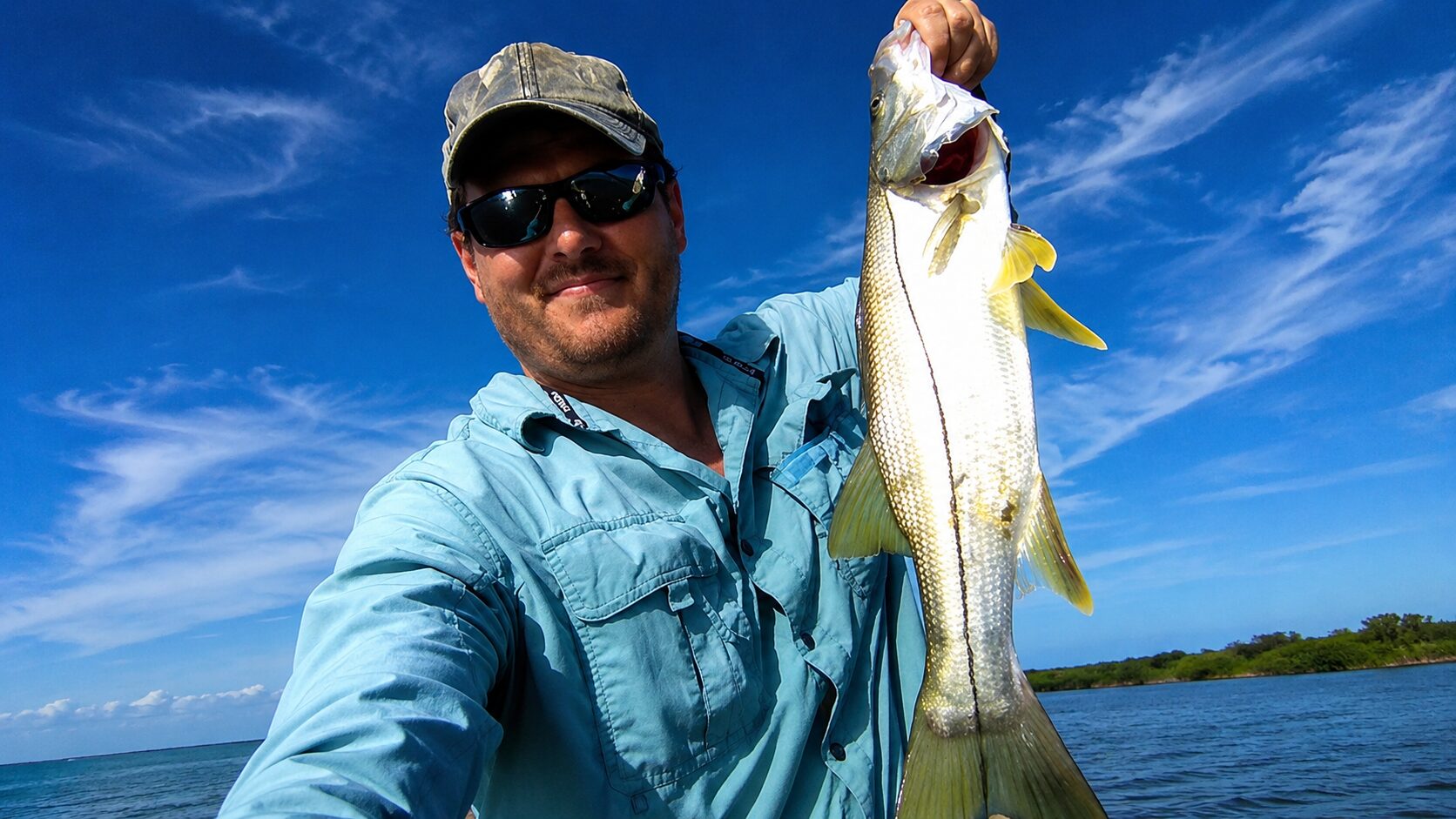
Daniel Hagan has been fishing Florida’s shores since 1985 and writing about it for more than 20 years. As Managing Editor of FloridaShoreFishing.com, he shares firsthand experience covering surf and pier fishing, tackle, techniques, and Florida’s coastal species.