
Last Updated on September 21, 2026
Florida Fish Profile
Mangrove Snapper (Gray Snapper)
A species reference covering identification, habitat, diet, size, behavior, similar species, and why mangrove snapper are one of Florida’s most accessible and popular inshore gamefish.
Lutjanus griseus · Family Lutjanidae
Mangrove Snapper at a Glance
| Common Name | Mangrove Snapper, Gray Snapper |
| Scientific Name | Lutjanus griseus |
| Family | Lutjanidae — Snappers |
| Habitat | Mangroves, docks, bridges, seawalls, reefs, rocky areas, seagrass beds, estuaries, and other structure |
| Typical Size | Many inshore fish are under 18 inches, although considerably larger fish occur |
| Typical Location | Close to structure and cover |
| Diet | Small fish, shrimp, crabs, and other crustaceans |
| Table Quality | Excellent |
What Is a Mangrove Snapper?
Mangrove snapper are one of Florida’s most familiar inshore snapper species. Although Florida anglers almost universally call them mangrove snapper, the species is officially known as the gray snapper.
Their scientific name is Lutjanus griseus, and they belong to the snapper family Lutjanidae. They are found throughout Florida’s coastal waters and can live in an unusually wide variety of environments, ranging from mangrove-lined estuaries and seagrass beds to bridges, rocky shorelines, coral reefs, and offshore structure.
Mangrove snapper are particularly important to shore anglers because younger and medium-sized fish regularly live within casting distance of land. Bridges, piers, seawalls, docks, mangrove shorelines, jetties, and inlets can all provide suitable habitat.
Mangrove Snapper Identification
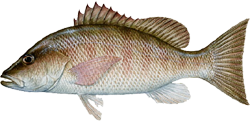
Mangrove snapper have a relatively slender but powerful body, a pointed snout, and a large mouth equipped with sharp canine teeth. Their coloration can vary considerably depending on their age, surroundings, and water conditions.
Adults are commonly gray, olive-gray, greenish, brownish, or slightly copper-colored. Small reddish-orange spots may form subtle horizontal rows along the sides. The fins are generally darker than the body and may have reddish or dark margins.
The Canine Teeth
One of the most noticeable features of a mangrove snapper is the pair of enlarged canine teeth near the front of the upper jaw. These teeth are part of the reason snapper are so effective at grabbing small fish, shrimp, and other prey around structure.
Juvenile Mangrove Snapper
Young mangrove snapper can look noticeably different from larger adults. Juveniles frequently display a dark brown or black stripe extending from the snout through the eye and toward the upper edge of the gill cover.
This dark eye stripe becomes less obvious as the fish matures. Young fish may also show stronger body markings and color patterns than adults.
Juvenile mangrove snapper spend much of their early lives in protected inshore environments such as mangrove shorelines, tidal creeks, estuaries, seagrass beds, canals, and other shallow habitats that provide abundant food and protection from larger predators.
Mangrove Snapper or Another Snapper?
Florida is home to several snapper species, and smaller fish can occasionally be difficult to distinguish. Cubera snapper and schoolmaster snapper are two species most likely to cause confusion.
| Species | Scientific Name | Common Identification Features |
|---|---|---|
| Mangrove Snapper | Lutjanus griseus | Gray, olive, or brownish body; prominent canine teeth; juveniles often have a dark stripe through the eye. |
| Cubera Snapper | Lutjanus cyanopterus | Similar overall appearance but develops into a much larger, heavier-bodied snapper with extremely large canine teeth. |
| Schoolmaster Snapper | Lutjanus apodus | Usually distinguished by yellow fins, a yellowish coloration, and pale vertical bars along the body. |
How Big Do Mangrove Snapper Get?
Most mangrove snapper caught from Florida’s shorelines, bridges, piers, canals, and other inshore areas are relatively modest in size. Fish under 18 inches are common in these environments, particularly where juvenile and young adult snapper use protected habitat.
The species is capable of growing considerably larger. FWC notes that gray snapper are commonly found up to about 24 inches and 10 pounds, while exceptional fish can exceed the sizes normally encountered by shore anglers.
Larger mangrove snapper are often associated with deeper water, reefs, wrecks, rock piles, and other offshore structure, although good-sized fish can also live around Florida bridges, inlets, docks, and deep shoreline structure.
Mangrove Snapper Habitat
Few Florida gamefish are comfortable in as many different coastal environments as mangrove snapper. They occur from shallow estuaries to offshore reefs and are strongly associated with structure throughout much of their lives.
Common Mangrove Snapper Habitat
- Mangrove shorelines and mangrove roots
- Bridges and bridge pilings
- Docks
- Piers
- Seawalls
- Rock piles and jetties
- Inlets
- Seagrass beds
- Estuaries and tidal creeks
- Canals
- Coral and artificial reefs
- Offshore wrecks and hard structure
For Florida shore anglers, their willingness to live around bridges, docks, mangroves, seawalls, and inlets makes them one of the most accessible members of the snapper family.
Why Do Mangrove Snapper Live Around Mangroves?
Mangrove shorelines provide exactly what young snapper need: food, shade, current, and a maze of submerged roots that offers protection from larger predators.
Small fish, shrimp, crabs, and other prey live in and around mangrove habitat, creating a natural feeding area for juvenile snapper. The roots also create countless hiding places where smaller fish can quickly escape danger.
As mangrove snapper grow, many begin using larger structure and deeper water, but the close association between this species and Florida’s mangrove habitat is strong enough that it provides the fish’s most familiar common name.
Can Mangrove Snapper Live in Freshwater?
Mangrove snapper are saltwater fish, but they have an impressive tolerance for changing salinity.
Juveniles frequently move into brackish estuaries, tidal rivers, canals, and creeks where freshwater mixes with saltwater. Gray snapper have even been documented entering freshwater environments in South Florida.
This ability to tolerate a wide range of salinity helps explain why mangrove snapper can be found in so many different Florida inshore environments.
What Do Mangrove Snapper Eat?
Mangrove snapper are opportunistic predators that feed on both fish and crustaceans. Their diet changes somewhat as they grow, with smaller juveniles relying heavily on small crustaceans and larger snapper consuming increasing amounts of fish.
Common Mangrove Snapper Food Sources
- Small baitfish
- Shrimp
- Crabs
- Small crustaceans
- Amphipods
- Copepods
- Other small marine animals
Their natural diet and preference for feeding close to cover help explain why mangrove snapper are commonly found wherever baitfish and crustaceans concentrate around Florida’s coastal structure.
See our full Best Baits for Mangrove Snapper article.
Mangrove Snapper Behavior
Mangrove snapper are structure-oriented predators. During daylight hours they frequently remain close to mangrove roots, pilings, rocks, reefs, ledges, and other forms of cover.
They are often found in groups, particularly when young, although larger fish can become more cautious and difficult to approach.
Gray snapper are also active nocturnal feeders. Fish that spend daylight hours holding tightly around structure may move into nearby open areas, seagrass beds, or sandy bottoms to feed after dark.
This combination of structure-oriented daytime behavior and increased feeding activity during low-light periods is an important part of how mangrove snapper use Florida’s inshore habitat.
Why Mangrove Snapper Stay Close to Structure
Structure provides mangrove snapper with both protection and an efficient place to feed.
Bridge pilings, mangrove roots, rocks, dock pilings, reefs, and seawalls interrupt current and create small areas where shrimp, baitfish, crabs, and other prey can collect. At the same time, those structures provide immediate cover if a predator approaches.
A mangrove snapper rarely needs to travel far from its shelter to find food, which helps explain why the species can become so strongly associated with individual pieces of structure.
Mangrove Snapper Distribution
Mangrove snapper have a broad western Atlantic distribution extending from the eastern United States through the Gulf of Mexico, Caribbean, and southward along the Atlantic coast of South America.
Florida sits near the heart of excellent mangrove snapper habitat, and the species occurs along both the Atlantic and Gulf coasts of the state.
Their ability to use estuaries, mangroves, seagrass beds, canals, bridges, reefs, and offshore structure allows mangrove snapper to occupy an unusually broad range of Florida coastal environments.
Mangrove Snapper Are Members of the Snapper Family
Mangrove snapper belong to the family Lutjanidae, a group that includes many of Florida’s most recognizable reef and coastal gamefish.
| Genus | Lutjanus |
| Species | griseus |
| Family | Lutjanidae |
| Common Family Name | Snappers |
Are Mangrove Snapper Good to Eat?
Mangrove snapper are widely considered excellent table fare and are one of Florida’s most popular food fish.
Their meat is generally:
- White
- Firm
- Mild
- Slightly sweet
- Versatile for cooking
Mangrove snapper can be grilled, baked, fried, blackened, pan-seared, or used in fish tacos and many other seafood dishes.
Are Mangrove Snapper Good Fighting Fish?
Mangrove snapper are strong, fast fish for their size, particularly when hooked close to structure.
Instead of making a long open-water run, a hooked mangrove snapper often tries to return immediately to the mangrove roots, bridge pilings, rocks, dock supports, or other cover it was using before the strike.
This quick burst of power makes even relatively small snapper entertaining on light tackle and helps larger fish earn a reputation as surprisingly difficult opponents in tight quarters.
Why Mangrove Snapper Are Great for Florida Shore Anglers
Mangrove snapper are particularly well suited to shore fishing because so much of their preferred habitat is accessible without a boat.
Florida shore anglers can encounter them around:
- Bridges
- Fishing piers
- Jetties
- Inlets
- Docks
- Seawalls
- Canals
- Mangrove-lined shorelines
Their accessibility, strong fight, excellent table quality, and willingness to live around easily reached structure make mangrove snapper one of Florida’s most rewarding inshore species.
Why Mangrove Snapper Matter to Florida Shore Anglers
Mangrove snapper occupy a unique place in Florida shore fishing. They are true members of the snapper family, yet anglers do not need an offshore boat or a trip to a distant reef to encounter them.
A bridge piling, mangrove shoreline, dock, inlet, or seawall can put an angler within a few feet of fish that share many of the same instincts and characteristics as their offshore relatives.
They also teach one of the most important lessons in inshore fishing: structure matters. Mangrove snapper use cover for protection, ambush opportunities, current breaks, and access to food.
For Florida shore anglers, few species combine accessibility, challenge, food quality, and year-round inshore opportunity as well as the mangrove snapper.
Florida Shore Fishing Mangrove Snapper Resources
Explore our complete collection of Mangrove Snapper resources for identification, bait, gear, locations, and proven shore-fishing techniques.