
Last Updated on August 21, 2026
Mud minnows are one of the most useful live baits available to Florida shore anglers—and they don’t get nearly as much attention as shrimp, finger mullet or pinfish.
That’s a mistake.
For anglers fishing from Florida bridges, piers, docks, seawalls, mangrove shorelines, inlets and other shore-accessible areas, mud minnows offer an excellent combination of durability, natural movement and versatility.
They’re especially effective for redfish, flounder and mangrove snapper, but plenty of other Florida inshore predators will eat them.
One of their biggest advantages is simply how tough they are. Mud minnows can tolerate conditions that quickly weaken more delicate baitfish, remain lively on the hook for a long time, and are relatively easy to transport in a basic bait bucket. Florida Shore Fishing’s existing mud minnow content has long highlighted this durability as one of their greatest strengths.
If you fish Florida from shore and have access to mud minnows, they’re a bait worth learning how to use.
What Are Mud Minnows?
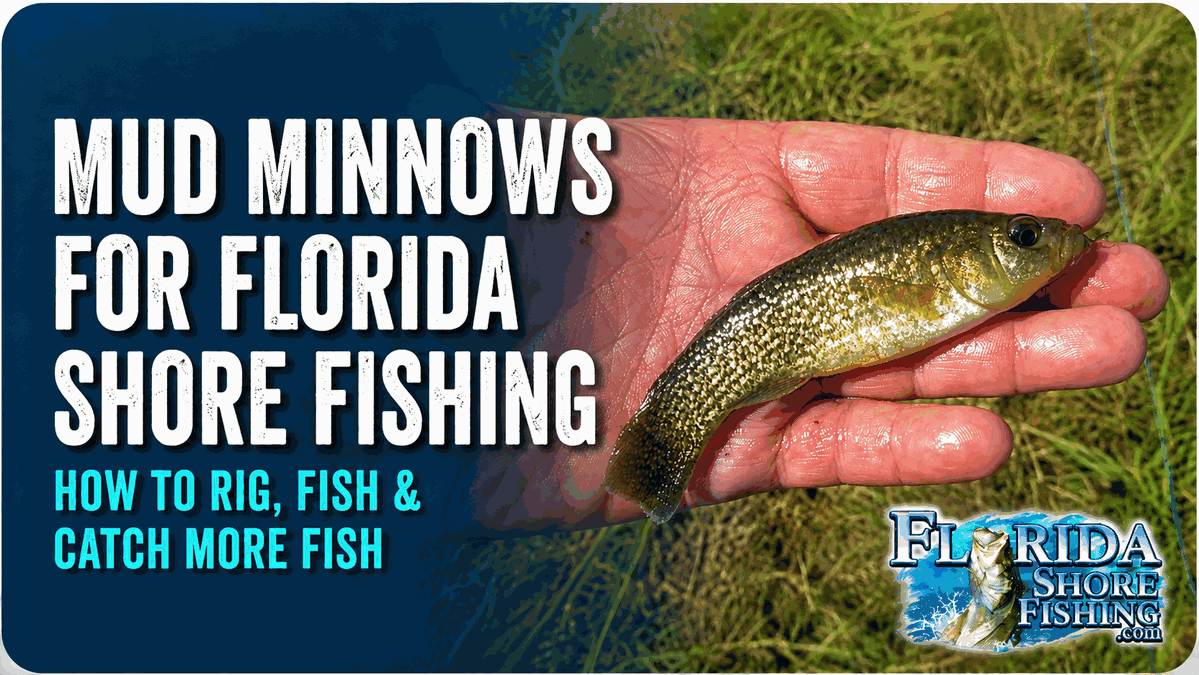
“Mud minnow” is a common fishing name applied to several small, similar-looking baitfish. Florida anglers may also hear them called bull minnows.
They vary in size, with many of the minnows used as bait falling somewhere around 2 to 4 inches, although larger individuals can reach roughly finger-mullet size.
For anglers, their exact identification is usually less important than their characteristics as bait.
Mud minnows are:
- Extremely hardy
- Comfortable around shallow water
- Naturally associated with bottom habitat
- Easy for many predators to swallow
- Capable of staying active on a hook for long periods
- Available throughout many Florida coastal and estuarine environments
Unlike fast-moving pelagic baitfish, mud minnows spend much of their time around shallow bottom habitat and cover. That makes them particularly well suited for the species shore anglers commonly target.
Why Mud Minnows Are So Good for Florida Shore Fishing
Live bait is only useful if you can keep it alive long enough to fish with it.
That’s where mud minnows really stand out.
Anyone who has tried keeping delicate baitfish alive in a bucket on a hot Florida fishing trip knows how quickly things can go wrong.
Mud minnows are much more forgiving.
A basic bait bucket with periodic water changes can keep them going for hours, while aeration makes keeping them alive even easier. You should still protect the bucket from direct Florida sun because warmer water holds less dissolved oxygen.
That durability matters even more after you put one on a hook.
A healthy mud minnow can remain active for a long time, meaning you don’t have to retrieve your rig every few minutes simply to replace dead bait.
That’s a major advantage when you’re fishing from a pier, bridge or shoreline where you want a bait soaking near productive structure.
Best Fish to Catch With Mud Minnows in Florida
Mud minnows can catch a wide variety of predators, but several species stand out.
Redfish
Mud minnows are excellent redfish bait.
Redfish spend a tremendous amount of time searching shallow flats, oyster areas, creek mouths, shorelines and other inshore habitat for small fish and crustaceans.
Those are exactly the kinds of environments where mud minnows naturally occur.
Fish them near:
- Oyster bars
- Mangrove edges
- Creek mouths
- Drop-offs
- Bridge structure
- Grass edges
- Sandy potholes
A live mud minnow placed in the right area gives a passing redfish a natural-looking meal that’s difficult to ignore.
Florida Shore Fishing has previously ranked mud minnows among its top inshore live baits and specifically noted their popularity among redfish anglers.
Flounder
Mud minnows and flounder are a natural combination.
Flounder spend much of their time on or near the bottom waiting for prey to move within striking distance.
A mud minnow presented close to the bottom puts your bait exactly where a flounder expects to find food.
An older Florida Shore Fishing pier trip provides a good real-world example: mud minnows fished from the pier produced both redfish and flounder during the same outing.
When specifically targeting flounder, concentrate on areas where current carries your minnow past likely ambush points.
Mangrove Snapper
Mud minnows can also be excellent for inshore mangrove snapper.
The key is structure.
Mangrove snapper commonly hold around bridges, docks, mangrove roots, rocks and other cover. A live mud minnow placed near that structure can be extremely effective.
Florida Shore Fishing’s mangrove snapper content specifically identifies mud minnows as one of the top natural bait choices for inshore fish.
The challenge isn’t always getting the bite.
It’s keeping the snapper from immediately reaching the structure after it eats.
Where to Fish Mud Minnows From Florida Shores
Mud minnows aren’t just useful because fish like eating them.
They’re especially useful because their natural habitat overlaps with places shore anglers can reach.
Bridges
Florida bridges are excellent places to fish mud minnows.
Look for:
- Pilings
- Current breaks
- Channels
- Rock around bridge bases
- Shadow lines
- Drop-offs
A Carolina-style rig allows you to get the minnow down near the bottom while still giving it some freedom to move.
Use only enough weight to control the bait in the current.
Piers
Mud minnows work very well from piers, particularly when targeting redfish, flounder or mangrove snapper.
Don’t assume the end of the pier is automatically the best location.
Fish may be underneath you or holding around pilings in relatively shallow or moderate depths. Florida Shore Fishing’s pier guidance similarly emphasizes structure and notes that shallow-to-mid-depth portions can sometimes outperform the deepest water.
Try dropping your mud minnow beside pilings or presenting it along nearby troughs and depth changes.
Docks
Docks provide shade, structure and feeding opportunities.
A mud minnow can be particularly effective around dock pilings, but don’t throw it so deep into the structure that landing a fish becomes nearly impossible.
Cast alongside the dock or position your bait where current carries it naturally toward the cover.
Mangrove Shorelines
Mangrove edges are another natural place to fish mud minnows.
Look for openings between roots, deeper pockets, points and areas where current sweeps along the shoreline.
Accuracy matters more than casting distance.
Put the bait close enough to the mangroves to attract fish without allowing your minnow to immediately swim into the roots and foul your rig.
Inlets and Seawalls
Current moving through an inlet creates excellent feeding opportunities.
Fish your mud minnow around current breaks, rocks, seawalls and transitions between shallow and deeper water.
Again, you usually don’t need the heaviest sinker you own.
Use enough weight to keep the minnow in the strike zone while allowing it to look natural.
Beaches
Mud minnows aren’t normally the first bait I’d choose when targeting traditional surf species such as whiting or pompano. Shrimp and sand fleas are generally better suited to that job.
But a mud minnow can be an excellent option when you’re beach fishing specifically for larger predators.
Florida Shore Fishing’s beach-fishing guide includes mud minnows among the live minnows that can produce game fish from the surf.
Fish them around troughs, cuts, drop-offs, inlets or other areas where predators may be searching for baitfish.
Best Rig for Fishing Mud Minnows From Shore
One of the simplest ways to fish a mud minnow is with a fish finder or Carolina-style rig.
The basic setup is:
Main line → sliding egg sinker → bead → barrel swivel → leader → hook
For many shore-fishing situations, start with:
Hook: Approximately #2 to 2/0 circle hook, adjusted to the size of the minnow and target species
Leader: Approximately 10–20 inches
Sinker: Enough weight to control the bait without unnecessarily pinning it down
The older FSF mud minnow guide recommends a roughly 10- to 14-inch leader and emphasizes adjusting sinker weight according to depth and current.
That’s still the important principle.
Use only as much weight as you need.
If you’re fishing a quiet shoreline in two feet of water, you don’t need the same weight you’d use underneath a bridge with strong tidal current.
How to Hook a Mud Minnow
For general shore fishing, hooking a mud minnow through the lips is a simple and effective approach.
Insert the hook through the lower portion of the mouth and out through the upper lip.
This helps keep the minnow oriented naturally while allowing it to remain active.
Don’t use an unnecessarily large hook.
The hook needs to be strong enough for the fish you’re targeting but small enough that it doesn’t overpower the bait.
A small mud minnow burdened by a huge hook isn’t going to swim naturally.
Keep the Hook Point Exposed
Don’t bury the point of the hook inside the bait.
You want the minnow secure, but you also need the hook to work when a fish eats it.
With circle hooks, avoid making a dramatic hookset.
When a fish takes the bait and begins pulling, reel steadily and allow the line to tighten. The circle hook is designed to move toward the corner of the fish’s mouth.
Free-Lining Mud Minnows
You don’t always need a sinker.
In shallow water with little current, free-lining a mud minnow can be extremely effective.
A free-lined minnow has much more freedom to swim naturally.
This technique is particularly useful around:
- Shallow flats accessible from shore
- Mangrove edges
- Sandy potholes
- Grass edges
- Drop-offs
- Protected shorelines
The original FSF mud minnow guide also recommends free-lining in shallow, low-current situations and targeting potholes, drop-offs and areas around cover.
The downside is control.
A healthy mud minnow may decide to swim directly into the nearest mangrove root, oyster clump or other piece of structure.
Keep an eye on your line and be prepared to redirect the bait.
Fishing Mud Minnows on the Bottom
When in doubt, start near the bottom.
Mud minnows naturally spend considerable time around bottom habitat, and that’s where many of the predators that eat them expect to encounter them.
A sliding sinker rig is excellent for this.
Use enough weight to reach and maintain the desired depth, but allow the leader and minnow some freedom of movement.
This presentation works particularly well for:
Flounder: Keep the minnow close to the bottom around drop-offs, channels and current edges.
Redfish: Fish near oyster bars, mangrove shorelines, creek mouths and shallow structure.
Mangrove snapper: Put the bait near the bottom around bridge pilings, docks and other hard structure.
Let the Mud Minnow Work
One of the biggest advantages of fishing live bait is that the bait does much of the work for you.
Don’t constantly reel a mud minnow in because nothing happened within two minutes.
Mud minnows are exceptionally durable.
Give the bait time to attract a predator.
A live minnow swimming and struggling near the bottom sends out movement that predatory fish can detect.
That doesn’t mean you should leave the rod untouched indefinitely.
Check your bait occasionally, particularly after a missed strike or if you suspect it has wrapped around your leader.
But mud minnows generally don’t require the constant replacement that some more delicate live baits do.
How to Keep Mud Minnows Alive While Shore Fishing
You don’t need an elaborate livewell.
A bait bucket with clean water can work well.
Better yet, use a portable aerator.
A few simple practices make a big difference:
- Keep the bucket out of direct sunlight.
- Don’t overcrowd it.
- Use clean water from the area you’re fishing.
- Provide aeration when possible.
- Replace water periodically if you’re not using an aerator.
- Remove dead bait quickly.
Florida heat is your biggest enemy.
Even hardy bait struggles when water becomes excessively warm and oxygen levels fall.
Put your bait bucket in the shade whenever possible.
How to Catch Your Own Mud Minnows
If you don’t want to buy them, mud minnows can often be caught in shallow Florida coastal habitat.
They commonly inhabit shallow muddy areas around mangroves, docks, bridges and boat ramps, but they can also be found around sandy bottom and grass flats.
Two common methods are:
Cast Netting
Because mud minnows often occupy shallow water, they can be good cast-net targets.
Walk slowly and watch the surface.
Moving minnows may create small wakes as they flee through shallow water.
When you locate them, cast ahead of or over the school.
Minnow Traps
Mud minnows are also well suited to traps.
A small baited minnow trap placed in productive shallow habitat can collect bait while you prepare your fishing equipment.
Florida Shore Fishing’s dedicated How to Catch Mud Minnows guide covers cast-netting and trapping in more detail and notes that cut fish and shrimp heads can work as trap bait.
Always check current state and local rules before collecting bait, particularly regarding allowable gear, trap requirements and collection limits.
Common Mistakes When Fishing With Mud Minnows
Using Too Much Weight
You want control, not an anchor.
Use enough sinker to keep the bait in the desired area while allowing it to move naturally.
Fishing Too Far From Structure
When you’re targeting mangrove snapper, redfish and other structure-oriented species, casting into featureless open water may put your bait away from the fish.
Look for pilings, mangroves, oyster bars, drop-offs and current changes.
Letting the Minnow Swim Into Cover
This is especially common when free-lining.
A healthy mud minnow may head directly toward the nearest structure.
Control your line and don’t give it unlimited freedom around mangrove roots or pilings.
Checking the Bait Too Often
Mud minnows are hardy.
Give them time to work.
Repeatedly retrieving a perfectly healthy bait can reduce the amount of time your presentation spends in the strike zone.
Using a Hook That’s Too Large
Match the hook to both your bait and target species.
You want the minnow to remain active and look natural.
Why Florida Shore Anglers Should Use Mud Minnows More Often
Mud minnows check nearly every box for a good Florida shore-fishing bait.
They’re hardy.
They’re relatively easy to keep alive.
They naturally inhabit many of the same environments where shore anglers fish.
And some of Florida’s most popular inshore game fish readily eat them.
If you’re fishing from a bridge, pier, dock, seawall, mangrove shoreline or inlet, a bucket of healthy mud minnows gives you a legitimate chance at redfish, flounder, mangrove snapper and other predators.
Keep the presentation simple.
Use a hook appropriate for the bait. Fish near the bottom when conditions call for it, or free-line your minnow in shallow water when you can get away without additional weight.
Most importantly, put the bait where predators naturally hunt.
A live mud minnow next to a productive bridge piling, drifting along a mangrove edge or moving across a flounder ambush point doesn’t need much help from you.
Sometimes the best thing you can do is put it in the right place—and let the minnow do the fishing.
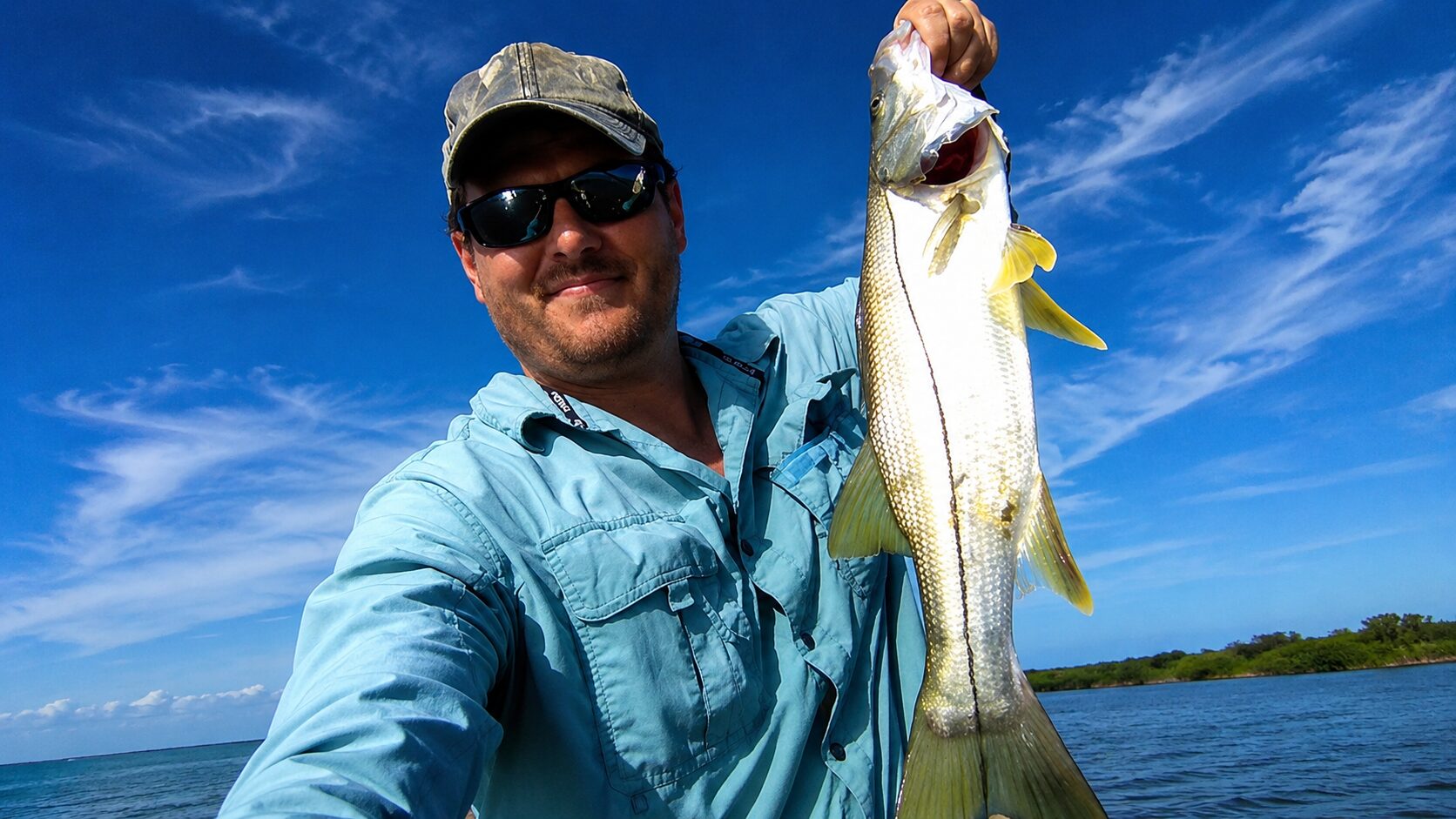
Daniel Hagan has been fishing Florida’s shores since 1985 and writing about it for more than 20 years. As Managing Editor of FloridaShoreFishing.com, he shares firsthand experience covering surf and pier fishing, tackle, techniques, and Florida’s coastal species.