
Flounder are one of the most rewarding fish a shore angler can target in Florida. They're excellent on the table, widely available throughout the state's coastal waters, and can be caught from beaches, bridges, docks, jetties, inlets, and mangrove shorelines without ever stepping into a boat.
Unlike fast-moving predators that chase bait across the water, flounder are masters of camouflage. They spend most of their lives lying motionless on the bottom, waiting for an unsuspecting baitfish or shrimp to drift within striking distance. That unique hunting style means catching them isn't about fishing fast—it's about fishing smart.
If you've ever wondered why experienced anglers seem to catch flounder consistently while others never do, the answer usually comes down to understanding where these fish position themselves and how they feed.
This guide covers everything you need to know to consistently catch more Florida flounder from shore, including where to find them, the best tackle, productive rigs, proven baits, effective artificial lures, and techniques that dramatically increase your success.
Understanding Florida Flounder
Florida anglers primarily encounter two species:
- Southern Flounder
- Gulf Flounder
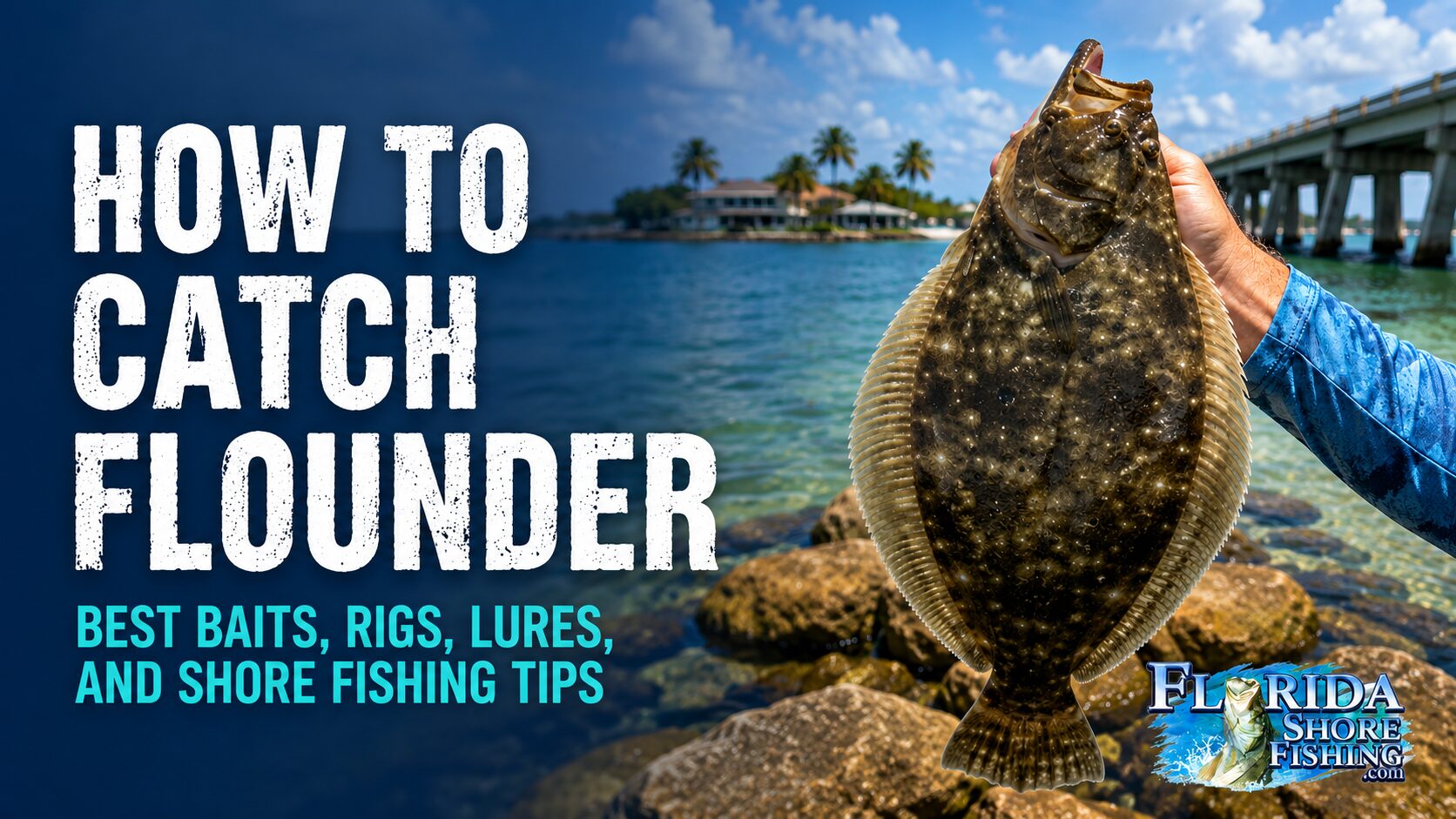
Both species are excellent eating and behave very similarly. They have flattened bodies with both eyes located on one side, allowing them to disappear into sandy or muddy bottoms where they wait to ambush prey.
Unlike many gamefish that constantly cruise for food, flounder are incredibly patient. They'll often remain in one location for hours if current continues delivering bait.
Understanding this single behavior makes finding flounder much easier.
Where to Find Flounder
Finding flounder is usually much more important than choosing the perfect lure.
Ask yourself one question:
"Where would bait naturally drift with the current?"
That's exactly where flounder position themselves.
Inlets
Inlets are among the most productive flounder locations in Florida.
The constant tidal flow carries shrimp, mullet, sardines, mud minnows, and other forage directly past waiting fish.
Fish the edges of the current rather than the strongest flow.
Look for:
- Sandy pockets
- Rock edges
- Drop-offs
- Current seams
- Protected eddies
These areas allow flounder to conserve energy while waiting for food.
Creek Mouths
Small creeks feeding into bays and estuaries often produce outstanding flounder fishing.
Outgoing tides wash shrimp and baitfish into deeper water, creating feeding opportunities.
Position yourself so your bait naturally moves with the current instead of against it.
Oyster Bars
Oyster bars are magnets for bait.
They provide food, current breaks, and ambush points all in one location.
Work every edge carefully.
Many anglers make one cast and move on.
Experienced flounder fishermen make ten.
Bridges
Bridge pilings interrupt tidal current, creating calm pockets where bait collects.
Cast slightly upstream and allow your bait to drift naturally along the bottom.
Most strikes occur as the bait passes the down-current side of the piling.
Docks
Private docks, marinas, and fishing piers all create shade and structure.
Small baitfish gather around pilings, attracting hungry flounder.
Slow presentations are essential.
Don't rush.
Sandbars and Drop-offs
Flounder love changes in bottom depth.
The transition between shallow flats and deeper channels is one of the most consistent places to find them.
Fish parallel to these edges whenever possible.
Best Time to Catch Flounder
Although flounder can be caught throughout the year, fishing generally improves during:
- Spring
- Fall
These seasons typically offer cooler water temperatures and increased bait movement.
Tidal movement is even more important than the season.
Moving water consistently produces more fish than slack tide because current brings food directly to waiting flounder.
Best Rod and Reel
Fortunately, flounder don't require expensive equipment.
A quality medium or medium-heavy spinning setup handles nearly every situation.
Recommended setup:
- 7-foot spinning rod
- Fast action
- Medium or medium-heavy power
- 2500–3000 size spinning reel
This combination provides excellent casting distance while remaining sensitive enough to detect subtle bites.
Best Fishing Line
Braided line offers several advantages.
It:
- Increases sensitivity
- Cuts through current
- Improves hooksets
- Performs well around structure
A great all-around choice is:
- 10–20 lb braided line
- 15–20 lb fluorocarbon leader
The fluorocarbon leader helps resist abrasion from rocks, oyster shells, and dock pilings while remaining difficult for fish to see.
Best Live Baits
Flounder aren't especially picky.
If it swims naturally along the bottom, they'll probably eat it.
Top choices include:
- Finger mullet
- Mud minnows
- Live shrimp
- Pilchards
- Small pinfish
- Scaled sardines
Live finger mullet remain one of the most productive options throughout Florida.
The Carolina Rig
The Carolina Rig remains the gold standard for live bait.
It consists of:
- Egg sinker
- Bead
- Barrel swivel
- 12–24 inch fluorocarbon leader
- 1/0–3/0 hook
Use only enough weight to maintain bottom contact.
Too much weight reduces sensitivity and causes unnatural bait movement.
Circle Hooks vs. J Hooks
Both work well.
Circle hooks offer several benefits:
- Better corner-of-mouth hookups
- Less injury
- Easier releases
- Fewer gut-hooked fish
When using circle hooks:
Don't jerk.
Instead, simply begin reeling while lifting the rod steadily.
Best Artificial Lures
Many anglers believe live bait always wins.
Not necessarily.
Artificial lures often outproduce live bait because they cover much more water.
Top performers include:
Berkley Gulp! Shrimp
The scent helps convince hesitant fish to hold onto the bait longer.
Berkley Gulp! Swimming Mullet
Arguably the best artificial flounder bait ever made.
Its scent and realistic action make it deadly.
Paddle Tail Swimbaits
These excel when fish are actively feeding.
Use natural colors whenever possible.
Bucktail Jigs
Simple.
Effective.
Timeless.
Tip them with soft plastics for added attraction.
Scented soft plastics consistently outperform unscented versions because flounder frequently grab prey before fully committing to swallowing it.
Jig Head Selection
Choose the lightest jig that still maintains bottom contact.
Common sizes include:
- 1/8 oz
- 1/4 oz
- 3/8 oz
Heavy current requires heavier heads.
Calm water usually does not.
The Most Important Technique
If there's one secret to catching more flounder, it's this:
Slow down.
Then slow down even more.
Most anglers fish far too quickly.
A flounder wants an easy meal.
Dragging a lure slowly across the bottom keeps it in the strike zone much longer.
Think inches—not feet.
Bottom Contact
Always know where your lure is.
Flounder feed on the bottom.
If your lure is swimming several feet above them, they may never even see it.
Maintain occasional bottom contact without constantly snagging.
Detecting the Bite
This is where many anglers struggle.
A flounder bite rarely feels violent.
Instead, it may feel like:
- Extra weight
- A soft tap
- Mushiness
- A slight "thump"
- Your lure stopping unexpectedly
Many experienced anglers describe it as feeling like you've snagged a wet towel or weeds before the fish begins to move.
Should You Wait Before Setting the Hook?
This depends on your hook.
With traditional J-hooks, allowing several seconds can help the fish position the bait before setting the hook.
With circle hooks, don't wait for a dramatic hookset.
Simply begin reeling steadily while lifting the rod.
Landing Flounder
Many flounder are lost at boats, docks, and shorelines.
Why?
They shake violently near the surface.
Always use a landing net whenever possible.
This dramatically improves your landing percentage, especially on larger fish.
Fishing Around Structure
Don't avoid structure.
Target it.
Flounder commonly hold around:
- Rocks
- Dock pilings
- Bridge pilings
- Oyster beds
- Riprap
- Seawalls
These areas collect bait while breaking current.
Fishing the Tides
Incoming tides bring clean water and fresh bait.
Outgoing tides sweep shrimp and baitfish from marshes and creeks.
Both can be productive.
Rather than focusing on incoming versus outgoing, prioritize moving water.
Beach Flounder Fishing
Many anglers overlook beaches.
Flounder often patrol:
- Troughs
- Sandbars
- Cuts
- Small outflows
- Areas near jetties
Fish parallel to shore whenever possible.
Night Fishing
Night fishing can be outstanding.
Reduced boat traffic allows fish to feed comfortably.
Dock lights attract bait.
Bait attracts flounder.
Simple.
Seasonal Movements
During warmer months, flounder spread across bays, creeks, and grass flats.
As temperatures cool, they often become concentrated around:
- Inlets
- Channels
- Deeper passes
Understanding seasonal movement dramatically increases success.
Common Mistakes
Avoid these frequent errors:
Fishing too fast
Using too much weight
Keeping the lure off the bottom
Leaving productive spots too quickly
Setting the hook too aggressively with circle hooks
Ignoring current
Using leaders that are too short around structure
Conservation
Always check current FWC Flounder regulations before harvesting flounder, as seasons, bag limits, and size restrictions can change. Harvest only legal fish and consider releasing thinner fish that have little table value so they can continue to grow and reproduce.
Final Thoughts
Flounder fishing isn't about expensive tackle or complicated techniques. Success comes from understanding how these fish live.
Remember these fundamentals:
- Fish where current delivers bait.
- Keep your lure on the bottom.
- Slow your retrieve.
- Use natural presentations.
- Pay attention to subtle bites.
- Fish around structure whenever possible.
Master those principles, and you'll quickly discover why flounder are one of Florida's favorite inshore game fish. Whether you're casting from a bridge, walking a sandy beach, working a quiet creek mouth, or fishing beneath your favorite dock, these ambush predators provide exciting action and some of the finest table fare you'll ever catch.
With patience, the right presentation, and an understanding of where flounder position themselves, you'll dramatically increase your odds of landing one of these delicious flatfish on your very next trip.
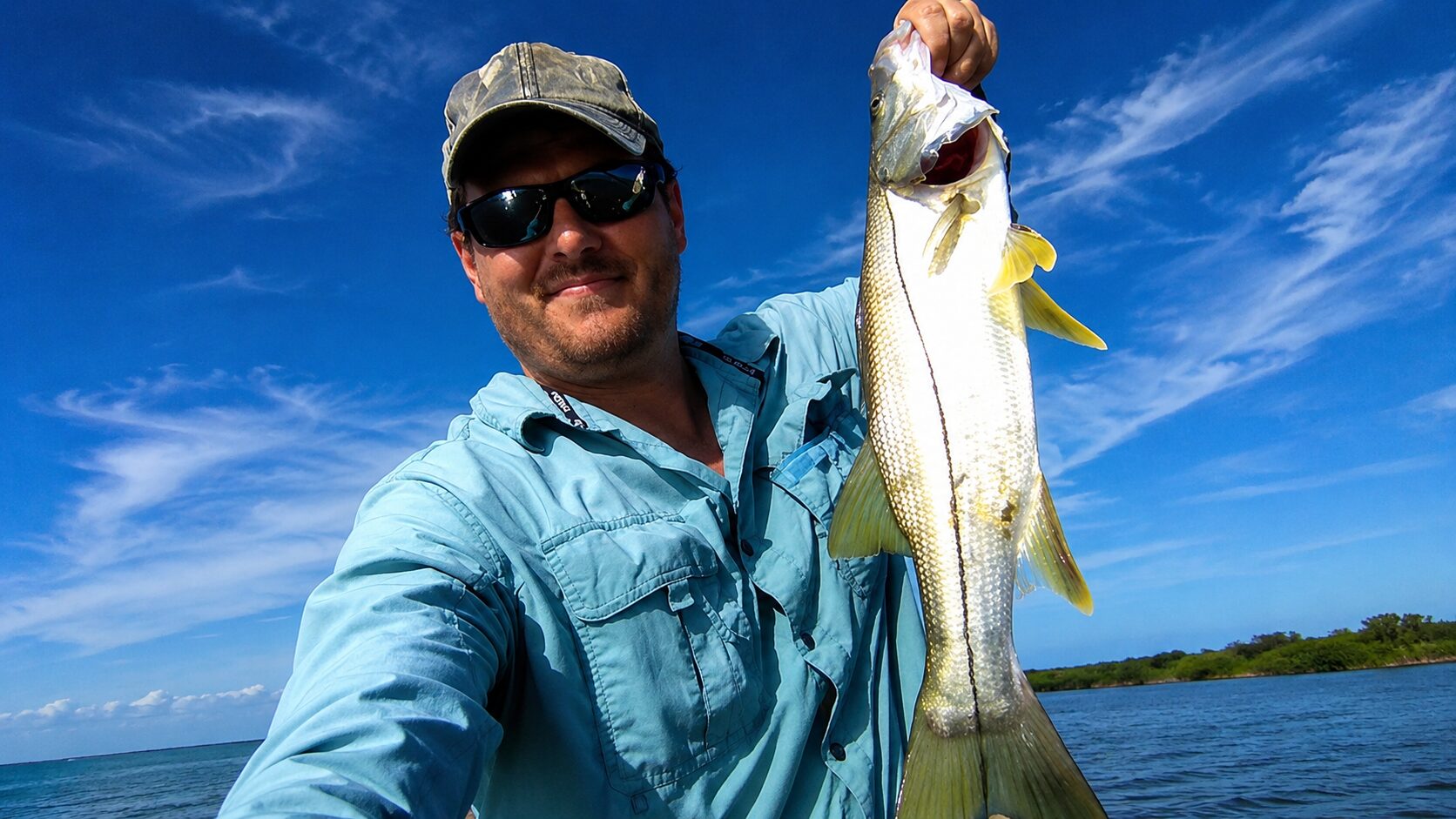
Daniel Hagan has been fishing Florida’s shores since 1985 and writing about it for more than 20 years. As Managing Editor of FloridaShoreFishing.com, he shares firsthand experience covering surf and pier fishing, tackle, techniques, and Florida’s coastal species.