
Last Updated on August 19, 2026
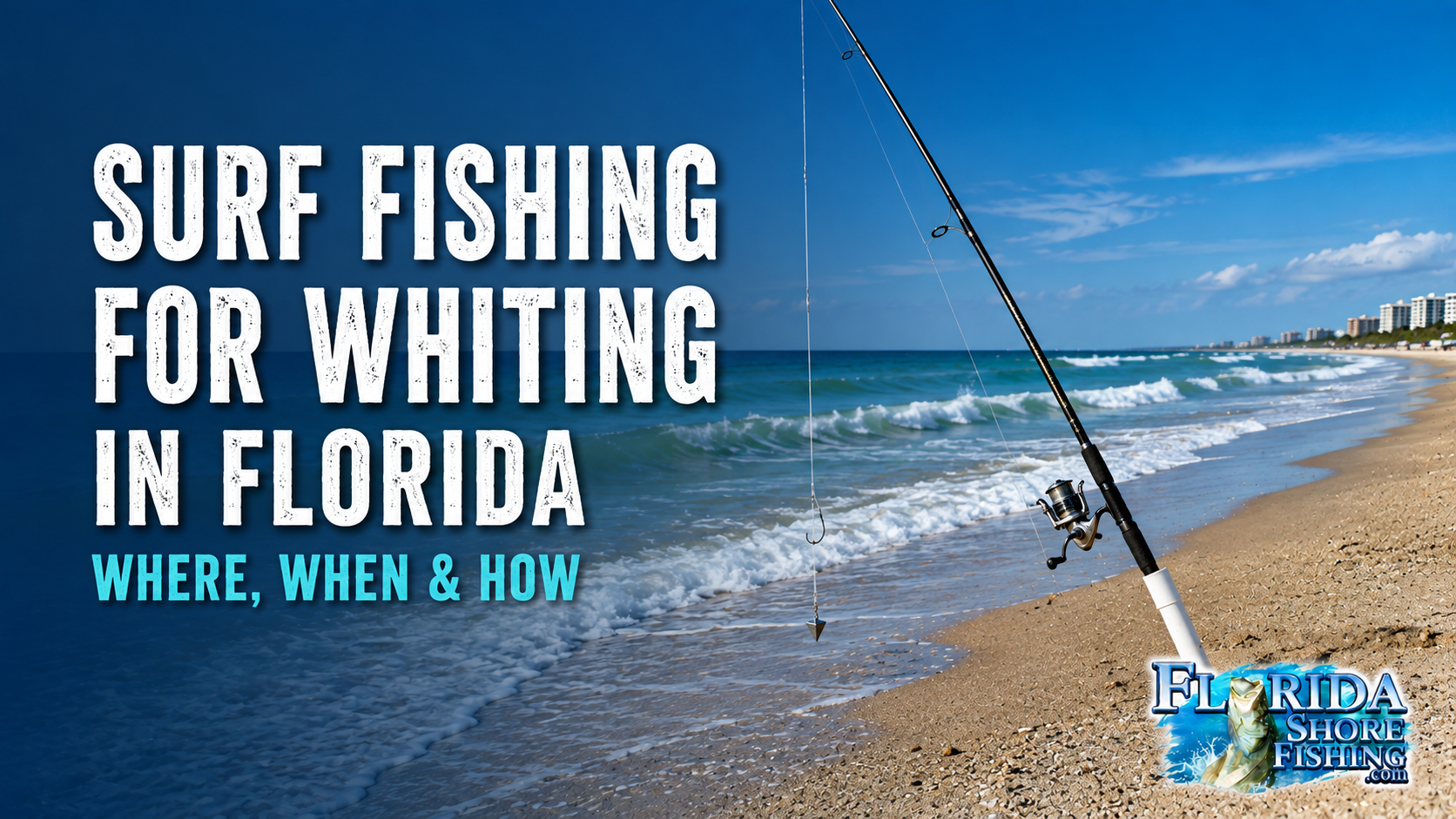
Surf fishing for whiting is one of the simplest and most productive ways to fish Florida’s beaches. You don’t need a boat, specialized equipment, or the ability to cast halfway to the horizon. In many cases, the whiting you’re looking for are feeding surprisingly close to shore.
Whiting spend much of their time searching sandy areas for shrimp, sand fleas, marine worms, small crustaceans, and other bottom-dwelling prey. Florida’s beaches provide exactly that kind of habitat.
The trick isn’t necessarily casting farther. It’s learning where food is being concentrated by waves and current and putting a small bait there.
Once you understand the troughs, sandbars, cuts, wash, and moving water along a beach, finding whiting becomes much easier.
This guide focuses specifically on surf fishing for whiting in Florida—where to look, how far to cast, what conditions to fish, and how to locate feeding fish after you arrive at the beach.
Why Florida Beaches Are So Good for Whiting
Whiting are built for feeding around sandy bottoms.
Rather than depending heavily on reefs, rocks, docks, or other obvious structure, whiting commonly search areas where waves and current expose small creatures hiding in the sand.
That’s what makes Florida’s beaches such productive whiting habitat.
Every breaking wave moves water and sand. That movement can expose or dislodge:
- Small shrimp
- Sand fleas
- Marine worms
- Tiny crabs
- Mollusks
- Other small bottom-dwelling organisms
Whiting patrol these feeding areas looking for opportunities.
This is also why seemingly featureless stretches of beach aren’t necessarily featureless to the fish.
A small change in depth, a break in a sandbar, or an area where water is moving differently can create a feeding zone.
Learning to recognize those differences is one of the most useful skills you can develop as a Florida surf angler.
Where Whiting Hold in the Surf
When you’re surf fishing for whiting, don’t look at the entire ocean as one giant fishing spot.
Break the beach into smaller pieces.
You’re looking for places where depth, current, waves, and bottom structure make it easier for whiting to find food.
The First Trough
The first trough should be one of the first places you fish.
A trough is a deeper channel running roughly parallel to the beach. Depending on the beach, the first trough may be only a short distance from dry sand.
This is important because many anglers unknowingly cast completely over it.
Water moving through the trough can carry shrimp, sand fleas, worms, and other small prey. Whiting can move through the channel looking for food without traveling far from shore.
The trough isn’t always dramatically deeper than the surrounding bottom.
Sometimes a relatively subtle change is enough to concentrate fish.
The Edges of the Trough
Don’t think only about the deepest part.
The edges where shallow water drops into the trough can also be productive.
Food disturbed from shallower sand may wash down the slope, creating an easy feeding opportunity.
If you’re not getting bites in the center of the trough, move your bait slightly shallower or deeper.
A difference of only a few yards can matter.
Cuts Through Sandbars
Look for breaks or cuts in an offshore sandbar.
Water moving toward shore eventually has to move back out. Breaks in a sandbar can concentrate that movement.
Moving water can also transport food.
Whiting may position themselves near these areas and feed on whatever the current carries past them.
A cut may appear as an area where waves break differently—or don’t break at all—compared with the surrounding water.
The Wash
Don’t ignore the turbulent water immediately along the beach.
Waves constantly wash across the sand and then retreat. That action can uncover small prey.
Whiting sometimes move into remarkably shallow water to take advantage of it.
If you’ve ever seen sand fleas exposed as a wave retreats, you already understand why this area can attract feeding fish.
Sandbar Edges
The deeper water immediately before and after a sandbar is another area worth investigating.
Whiting may move along these depth changes rather than sitting in one location.
You don’t necessarily need to put your bait directly on top of the bar.
Try fishing its edges.
Current
Current is one of the most important pieces of the puzzle.
Look for areas where water is visibly moving differently from its surroundings.
That doesn’t mean the strongest current is automatically best.
Instead, you’re looking for fishable moving water that may be carrying food.
If you can keep your bait on the bottom while current moves through an area, it’s worth trying.
For a more complete explanation of troughs, sandbars, cuts, wave patterns, and other beach structure, see our How to Read a Florida Beach guide.
Don’t Cast Over the Whiting
One of the most common mistakes in surf fishing is assuming that a longer cast is always a better cast.
It isn’t.
There are certainly days when fish are feeding farther offshore, but whiting can also be surprisingly close to the beach.
You may have fish feeding in the first trough while your bait sails completely over them.
That’s why I don’t recommend beginning every trip with the longest cast you can possibly make.
Start Close
Make your first cast relatively close to shore.
You’re trying to investigate the first trough and nearby wash.
If you don’t get bites, cast a little farther.
Continue working outward until you find activity.
If you’re fishing multiple rods, make the process even easier by staggering your distances.
For example:
Rod 1: Close to shore
Rod 2: Middle distance
Rod 3: Farther out
Now you’re searching three zones simultaneously.
When one rod starts getting repeated bites, you have valuable information.
Move another bait into that same general zone.
Casting Distance Isn’t the Goal
The goal is not to cast far.
The goal is to put your bait where the whiting are feeding.
Sometimes those are the same thing.
Often they aren’t.
An angler making an accurate 30-yard cast into a productive trough can easily outfish someone throwing 100 yards into relatively empty water.
Best Surf Conditions for Whiting
You don’t need a perfectly flat ocean to catch whiting.
Some wave action can actually be beneficial because moving water disturbs the bottom and may expose the food whiting are searching for.
The bigger question is whether you can effectively fish the conditions.
Water Clarity
Extremely dirty water can make fishing more difficult, particularly when heavy surf has stirred up large amounts of sand and debris.
On the other hand, the water doesn’t need to be perfectly clear.
A little color combined with manageable surf can still produce excellent fishing.
Pay attention to how the water looks along different portions of the beach. Conditions can vary significantly even over relatively short distances.
Wave Action
Moderate wave action can create feeding opportunities.
Breaking waves stir the bottom and move food around.
Problems begin when the surf becomes strong enough that you can’t keep your bait where you want it.
If your sinker immediately rolls down the beach after every cast, either adjust your tackle or find more protected water.
Current
Some current is useful.
Too much current makes presentation difficult.
The practical test is simple:
Can you keep your bait in a productive area long enough for a fish to find it?
If the answer is yes, the current is fishable.
Wind
Wind primarily matters because of what it does to the water and your ability to fish.
Strong onshore wind can create rough surf, make casting difficult, and push additional debris toward the beach.
A light or manageable wind isn’t necessarily a problem.
Instead of judging the day solely by wind direction, look at the resulting surf conditions.
Seaweed and Debris
Heavy floating vegetation can shut down an otherwise promising stretch of beach.
If every cast results in a large clump of seaweed collecting on your line, moving may be more productive than repeatedly cleaning your rig.
Sometimes walking a few hundred yards—or changing beaches entirely—can put you in much cleaner water.
Best Time of Day for Surf Fishing for Whiting
Morning is an excellent time to fish Florida beaches, but that doesn’t mean whiting stop feeding once the sun gets higher.
Early morning has several practical advantages.
Temperatures are often more comfortable, beaches may be less crowded, and you can fish before swimmers and beach traffic increase.
Evening can offer similar advantages.
However, I wouldn’t skip a fishing trip simply because you can’t arrive at sunrise.
Whiting can feed throughout the day.
Beach conditions, tide, food availability, and the location of the fish can matter more than the number showing on the clock.
If you can fish early, great.
If you can’t, go when you can and concentrate on finding productive water.
Best Tide for Surf Fishing for Whiting
There isn’t one magical tide that guarantees whiting.
What matters is how the tide affects the specific beach you’re fishing.
Changing water levels alter trough depth, current, wave action, and access to feeding areas. A spot that looks unremarkable at one stage of the tide can become much more productive later.
Moving water is generally worth paying attention to because it can help move food through the surf zone.
Rather than automatically deciding that you must fish only high tide or only low tide, learn how different stages affect your beach.
Our dedicated Best Tide for Whiting guide covers this topic in much greater detail.
Best Whiting Surf Rig
You don’t need complicated tackle for whiting.
For most Florida beach fishing, a two-hook double-drop rig is an excellent starting point.
A typical setup might include:
- 10–20 lb main line
- Small barrel swivel
- 15–25 lb leader
- #2 to #1 circle hooks
- Two dropper lines
- 2–4 oz pyramid sinker
Adjust your sinker according to the surf.
The correct sinker is the lightest one that reliably keeps your bait where you want it.
A standard pompano-style rig can also work extremely well for whiting, particularly if you downsize the hooks and bait.
For the complete setup, hook sizes, leader choices, sinkers, and alternatives, see Best Whiting Rig for Florida Surf Fishing.
Best Bait for Surf Fishing for Whiting
Fresh shrimp is one of the most reliable whiting baits you can put on a hook.
The key is keeping the bait relatively small.
Whiting don’t have huge mouths, and a massive piece of shrimp can make it more difficult for them to take the hook.
Other productive choices include:
- Sand fleas
- Frozen shrimp
- Scented artificial bait
- Clams
- Small pieces of other natural bait
Sand fleas are especially worth trying when they’re abundant on the beach you’re fishing.
A two-hook rig lets you test different baits simultaneously.
Put shrimp on one hook and a sand flea or scented bait on the other.
Then let the fish make the decision for you.
For bait sizes, hook placement, fresh versus frozen shrimp, sand fleas, and scented alternatives, see Best Bait for Whiting in Florida.
How to Find Whiting When You Arrive at the Beach
Instead of choosing a random spot, casting as far as possible, and waiting, use a simple search process.
1. Look at the Beach Before Fishing
Spend a few minutes watching the water.
Look for:
- Troughs
- Sandbars
- Cuts
- Changes in wave patterns
- Moving water
- Areas of cleaner water
- Current seams
- Wash that looks different from the surrounding beach
You don’t need to understand everything you’re seeing.
You’re simply identifying areas that deserve investigation.
2. Start Close
Fish the first trough or wash before making a long cast.
This is especially important when the beach has an obvious nearshore depression.
Don’t assume the fish are offshore.
3. Fan-Cast Different Distances
If close isn’t producing, move progressively farther out.
You’re searching for a feeding zone.
Multiple rods make this easier, but you can accomplish the same thing with one rod by changing casting distance after each soak.
4. Pay Attention to Every Bite
A bite tells you more than simply whether a fish is hungry.
It tells you that something is using that section of water.
If several bites occur at roughly the same distance, that’s a clue.
5. Concentrate on the Productive Zone
Once you begin catching whiting consistently, stop searching randomly.
Put your bait back into that zone.
Try to reproduce the casting distance and direction.
6. Move When Necessary
Don’t become emotionally attached to a piece of sand.
If you’ve covered multiple distances with good bait and aren’t getting activity, consider moving.
Sometimes walking down the beach is all that’s required.
Surf fishing is often a search game.
You’re trying to find feeding fish rather than waiting indefinitely for feeding fish to find you.
Florida Atlantic vs. Gulf Coast Whiting
Whiting can be caught from beaches on both Florida’s Atlantic and Gulf coasts, but the beaches themselves can fish differently.
Atlantic beaches frequently experience more pronounced surf, which can make troughs, sandbars, cuts, and wave patterns easier to recognize. Stronger surf and current may also require heavier sinkers to hold your rig in place.
Many Gulf beaches can be considerably calmer.
In calmer conditions, beach structure may appear less dramatic, and lighter tackle can sometimes be used effectively.
But these are broad tendencies rather than rules.
A calm Atlantic morning can be easier to fish than a windy Gulf afternoon.
Local conditions should always determine how you approach the beach.
The underlying strategy remains the same on either coast:
Find sandy bottom, identify moving water and depth changes, locate areas holding food, and search different casting distances until you find the fish.
Other Fish You’ll Catch While Targeting Whiting
One of the enjoyable things about Florida surf fishing for whiting is that you never know exactly what will eat your bait.
Shrimp and sand fleas aren’t exclusively whiting food.
Many Florida species search the same surf zone for similar prey.
Depending on your location and season, you may encounter:
Pompano
Pompano are probably the most obvious bonus catch.
They frequently occupy the same sandy beach habitat and readily eat shrimp and sand fleas.
That’s one reason pompano rigs work so well for whiting.
Black Drum
Black drum also search sandy areas for crustaceans and other bottom-dwelling prey.
Smaller drum can readily take a whiting-sized bait.
Redfish
Redfish frequently move through beach troughs, cuts, and areas near inlets.
A larger redfish on light whiting tackle can turn into an interesting fight very quickly.
Croakers
Whiting belong to the drum and croaker family, and other members of that family can show up while you’re bottom fishing.
Bluefish
Bluefish occasionally intercept baits intended for whiting.
Their teeth can make short work of light leader, so don’t be surprised if a fish suddenly cuts you off.
Spanish Mackerel
When baitfish are abundant near the beach, Spanish mackerel may also be present. They’re generally better targeted with moving lures, but their presence is another reminder of how diverse Florida’s surf can be.
Sharks and Rays
Small sharks and rays may also pick up bottom baits.
That possibility is another reason to avoid using tackle so light that you’re completely unprepared for anything larger than a whiting.
Keep Moving Until You Find the Whiting
Successful surf fishing for whiting in Florida has less to do with making heroic casts and more to do with understanding what is happening directly in front of you.
Look for troughs.
Watch the waves.
Identify cuts and moving water.
Pay attention to where the surf is disturbing the sand.
Then start close.
Fish several distances rather than automatically throwing as far as possible. When you get bites, remember exactly where they occurred and concentrate your effort there.
Use a simple bottom rig with small hooks, keep your bait appropriately sized, and use enough sinker to hold the bottom.
If nothing happens after you’ve thoroughly covered an area, move.
Florida beaches are constantly changing, and so are the fish.
Once you begin viewing the surf as a collection of troughs, bars, cuts, edges, and feeding zones instead of one giant body of water, finding whiting becomes much more systematic.
That’s the real key to catching whiting from the beach:
Don’t worry about reaching the farthest water. Find the right water.
For more detailed information, continue with How to Catch Whiting, Best Whiting Rig for Florida Surf Fishing, Best Bait for Whiting in Florida, , How to Read a Florida Beach, and our complete Florida Surf Fishing guide.
Daniel Hagan has been fishing Florida’s shores since 1985 and writing about it for more than 20 years. As Managing Editor of FloridaShoreFishing.com, he shares firsthand experience covering surf and pier fishing, tackle, techniques, and Florida’s coastal species.