
Last Updated on August 11, 2026
Florida is one of the best places in the country to fish from shore. With thousands of miles of coastline, countless bridges, piers, beaches, jetties, seawalls, mangrove shorelines, and public fishing areas, you don’t need a boat to catch quality saltwater fish.
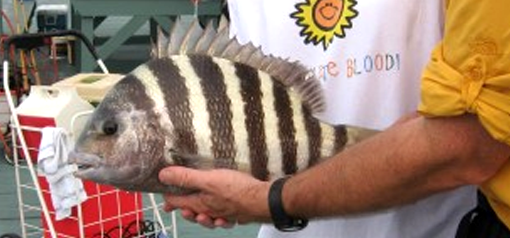
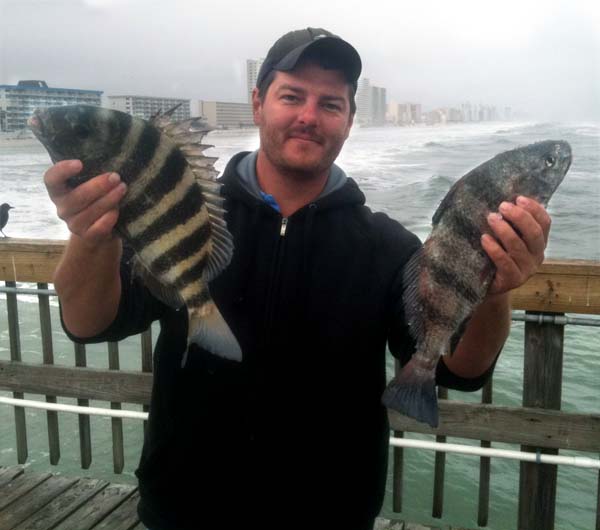
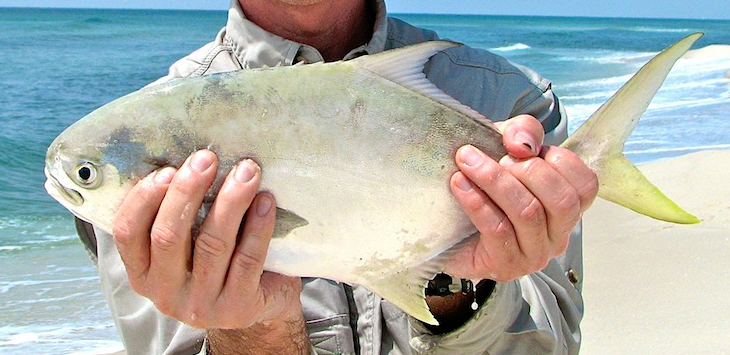
Snook, redfish, speckled trout, pompano, sheepshead, flounder, Spanish mackerel, black drum, mangrove snapper, and plenty of other species can all be caught with your feet planted firmly on land.
Yet shore fishing can also be frustrating.
You arrive at what looks like the perfect spot. The weather is beautiful. Your tackle box is loaded. You’ve bought fresh bait and made cast after cast.
Two hours later, nothing.
Meanwhile, another angler walks up, makes a few casts, and catches a fish.
What are they doing differently?
Often, successful Florida shore fishing isn’t about having better equipment or knowing a secret fishing spot. It’s about consistently doing the small things correctly.
Beginners commonly make mistakes that dramatically reduce their chances of catching fish. Even experienced anglers occasionally fall into these habits.
The good news is that most are easy to correct.
Here are 15 common Florida shore fishing mistakes and, more importantly, how to avoid them.
1. Fishing the Wrong Tide
One of the biggest mistakes shore anglers make is treating tides as an afterthought.
In saltwater fishing, tides aren’t simply changes in water level. They create current, move bait, expose feeding areas, flood others, and influence where predators position themselves.
You can fish an excellent location with perfect bait and still struggle if you’re there during the least productive stage of the tide.
Generally, moving water is your friend.
As an incoming tide pushes water toward shore and into estuaries, fish may follow bait onto flats, oyster bars, mangrove edges, and other feeding areas.
An outgoing tide can pull shrimp, baitfish, crabs, and other food from those areas and funnel them through creek mouths, cuts, bridges, and channels.
Slack tide—the period around high or low tide when water movement slows dramatically—can sometimes cause feeding activity to decrease.
That doesn’t mean fish can’t be caught during slack water. They absolutely can. But when you’re trying to maximize limited fishing time, periods of stronger tidal movement are often a better starting point.
How to Avoid This Mistake
Check the local tide forecast before leaving home.
Don’t look only at when high and low tide occur. Pay attention to the hours between them.
Then learn how your favorite fishing locations respond to different tides.
A beach trough might produce best during an incoming tide, while a creek mouth could come alive as water drains from the marsh on an outgoing tide.
Over time, keep notes.
You’ll begin discovering patterns that can turn an average fishing spot into a consistently productive one.
2. Using Hooks That Are Too Large
Walk through the saltwater section of almost any tackle shop and you’ll see some enormous hooks.
That doesn’t mean you need them.
Beginners often assume saltwater fish require giant hooks. In reality, many popular Florida species can be caught with surprisingly small tackle.
An oversized hook can make your bait look unnatural. It can interfere with the movement of shrimp and baitfish and make it harder for smaller fish to take the bait properly.
Think about what you’re actually targeting.
A sheepshead nibbling a small crab around a bridge piling doesn’t require the same hook you’d use for a large shark.
How to Avoid This Mistake
Match the hook to the bait and target species—not simply the possibility that something big might swim past.
Your hook should be large enough to provide a solid hookup while allowing the bait to move naturally.
Circle hooks are excellent choices for many live and cut-bait situations because they’re designed to catch near the corner of the fish’s mouth when used properly.
With circle hooks, avoid the dramatic hookset you might use with an artificial lure. Instead, allow the line to tighten and begin reeling steadily.
Smaller, appropriately sized tackle often results in more natural presentations and more bites.
3. Fishing Too Fast
This mistake is especially common among anglers transitioning from freshwater bass fishing.
They cast an artificial lure, retrieve it quickly, cast somewhere else, retrieve again, and continue moving.
That can work wonderfully when Spanish mackerel, jacks, bluefish, or other aggressive predators are actively chasing bait.
But it isn’t always the best approach.
Species such as flounder, redfish, sheepshead, and even snook may prefer a slower presentation depending on conditions.
Flounder are a perfect example.
They’re ambush predators that frequently lie on the bottom waiting for prey to come within striking distance. Racing a lure several feet above them may never get their attention.
How to Avoid This Mistake
Experiment with retrieve speed.
If you’re using a jig or soft plastic, let it reach the appropriate depth before beginning your retrieve.
Try:
- Slow, steady retrieves
- Short hops along the bottom
- Lift-and-drop retrieves
- Long pauses
- Slow dragging presentations
Pay attention to when strikes happen.
If fish consistently hit during pauses, you’ve learned something important.
Let the fish tell you how they want the bait.
4. Ignoring Current
Tides and current are related, but they’re not exactly the same thing from an angler’s perspective.
Current determines where food travels.
Predatory fish understand this extremely well.
Instead of randomly swimming around burning energy, fish frequently position themselves where moving water delivers food directly to them.
Bridge pilings are a great example.
Water flows around the piling, creating areas of faster current and protected pockets. Baitfish can become disoriented as they’re swept around the structure, creating easy feeding opportunities.
The same thing happens around rocks, points, oyster bars, jetties, seawalls, creek mouths, and channel edges.
How to Avoid This Mistake
Stop looking only at visible structure and start looking at how water interacts with it.
Watch for:
- Current seams
- Eddies
- Calm pockets beside fast water
- Points where water accelerates
- Creek mouths
- Cuts between sandbars
- Water flowing around pilings
Cast so your bait moves naturally through these areas.
Think like a predator.
Where can a fish remain relatively comfortable while food is carried toward it?
That’s where you want your bait.
5. Not Using a Fluorocarbon Leader
Florida’s coastal water can become extremely clear, particularly during calm conditions.
Attaching your lure or hook directly to highly visible braided line can sometimes cost you bites.
Braided line is fantastic as a main line because it’s thin, strong, sensitive, and has very little stretch.
But it isn’t always ideal as the final connection to your bait.
That’s where fluorocarbon comes in.
A fluorocarbon leader is less visible underwater and provides additional abrasion resistance around rocks, shells, pilings, and a fish’s mouth.
How to Avoid This Mistake
Add a fluorocarbon leader between your main line and lure or hook.
Leader strength depends on the species and structure you’re fishing.
Lighter leaders may generate more bites in clear water, while heavier leaders provide protection around abrasive structure or toothy fish.
Don’t automatically reach for extremely heavy leader material.
Use enough strength for the situation without unnecessarily sacrificing presentation.
6. Fishing Only One Depth
You cast into the deepest water you can reach because deeper must mean better.
Right?
Not necessarily.
Florida saltwater fish can feed in surprisingly shallow water.
Redfish may cruise shorelines in water barely deep enough to cover their backs. Snook regularly hunt right along beaches and seawalls. Pompano can travel through troughs surprisingly close to shore.
At other times, fish move into deeper channels.
The mistake isn’t fishing deep or shallow.
The mistake is fishing only one depth.
How to Avoid This Mistake
Fan-cast the area.
Start relatively close.
Then gradually increase your casting distance.
Cover:
- The shoreline
- First trough
- Sandbar edges
- Drop-offs
- Channels
- Deeper water
When you catch a fish, remember approximately where the strike occurred.
If the next fish comes from the same depth, you’ve probably discovered a pattern.
Then concentrate your casts there.
7. Leaving a Productive Spot Too Soon
Mobility is valuable when shore fishing.
But there’s a difference between covering water intelligently and constantly moving because you haven’t caught a fish within five minutes.
Fish move.
Tides change.
Bait moves.
A location that looks dead can suddenly become active when a school of bait arrives or the current reaches the right speed.
This is particularly true at inlets, bridges, passes, and beaches.
How to Avoid This Mistake
Give good locations enough time to develop.
If you’re seeing signs that fish should be nearby—baitfish, birds, moving current, feeding activity, good structure—don’t abandon the area immediately.
Instead, change something.
Try a different:
- Bait
- Lure
- Retrieve
- Casting angle
- Depth
- Leader size
Sometimes the fish are there. You simply haven’t presented something they want yet.
8. Not Matching the Hatch
“Match the hatch” is often associated with fly fishing, but the principle applies perfectly to Florida saltwater fishing.
Predators tend to eat whatever forage is abundant.
If tiny glass minnows are everywhere and you’re throwing a giant six-inch lure, your presentation may look completely out of place.
Likewise, if mullet are running and predators are crushing them, a mullet-shaped bait can be extremely effective.
How to Avoid This Mistake
Before making your first cast, spend a few minutes observing the water.
Look for bait.
What size is it?
What shape?
What color?
Is it near the surface or bottom?
Then choose something similar.
Common Florida forage includes:
- Mullet
- Pilchards
- Shrimp
- Pinfish
- Sardines
- Crabs
- Sand fleas
- Glass minnows
Matching the general size and profile is often more important than finding an absolutely perfect imitation.
9. Using Poor Knots
You can choose the perfect location, find feeding fish, select the right bait, and make a perfect cast.
Then your knot breaks.
Few fishing failures are more frustrating.
Saltwater tackle is constantly subjected to stress. Knots encounter repeated casting, strong fish, abrasive structure, and sudden pressure.
A poorly tied knot can become the weakest point in your entire setup.
How to Avoid This Mistake
Learn a small number of reliable fishing knots and become extremely good at tying them.
Useful knots for Florida shore anglers include:
- Palomar knot
- Uni knot
- Improved clinch knot
- Loop knot
- Double Uni knot
- FG knot
You don’t need to know twenty knots.
You need to confidently tie a few excellent ones.
After tying a knot, inspect it and pull firmly before casting.
Also check your leader regularly.
If you feel abrasion or damage, replace it.
Five minutes spent retying is better than losing the biggest fish of your day.
10. Not Checking Florida Fishing Regulations
This is one mistake that can cost considerably more than a fish.
Florida fishing regulations can vary by species, region, season, size, and harvest method. Regulations may also change.
Never assume that because a fish was legal to keep during your last trip, it’s automatically legal today.
How to Avoid This Mistake
Check current Florida Fish and Wildlife Conservation Commission regulations before your trip.
Verify:
- Minimum and maximum sizes
- Bag limits
- Closed seasons
- Regional differences
- Gear restrictions
- License requirements
When measuring fish, make sure you understand how that particular species must legally be measured.
When in doubt, release it.
A photograph lasts longer than a questionable fish in the cooler anyway.
11. Making Too Much Noise
Shore anglers sometimes underestimate how easily sound and vibration travel through water.
Slamming cooler lids, dropping tackle boxes on docks, stomping along a pier, or repeatedly throwing heavy objects into shallow water can alert nearby fish.
This matters particularly when targeting fish close to shore.
Snook and redfish can be surprisingly close to your feet.
How to Avoid This Mistake
Approach promising water quietly.
On beaches, resist the temptation to immediately wade as far as possible. Fish the close water first.
Around docks and bridges, avoid unnecessary banging and stomping.
Treat shallow-water fishing more like hunting.
Observe first.
Cast second.
12. Casting as Far as Possible Every Time
Long casts are fun.
They’re also frequently unnecessary.
Many anglers seem convinced the biggest fish must be located five feet beyond their maximum casting distance.
Meanwhile, they’re throwing over fish.
Beach anglers are particularly guilty of this.
Fish often use troughs running parallel to the beach. Depending on the tide and beach structure, that productive trough could be remarkably close to shore.
How to Avoid This Mistake
Fish near to far.
Your first cast doesn’t need to reach the horizon.
Work nearby water before casting farther.
If you’re fishing a seawall, pier, bridge, or jetty, look directly beneath you.
Structure often attracts fish right under your feet.
Distance is useful when fish are actually far away.
Otherwise, accurate placement beats maximum casting distance.
13. Using Too Much Weight
If one ounce keeps your bait on the bottom, four ounces must work even better.
Not necessarily.
Using excessive weight can make your presentation unnatural and reduce your ability to detect subtle bites.
The goal is generally to use enough weight to accomplish what you’re trying to do.
No more.
In strong surf or heavy inlet current, that might require substantial weight.
In a calm bay, you may need very little.
How to Avoid This Mistake
Use the lightest sinker or jig head that still allows you to maintain the necessary control.
If you’re fishing moving bait, you may actually want it to drift naturally rather than remain completely stationary.
Adjust your weight as conditions change.
Don’t use the same sinker simply because that’s what was already tied on your rod.
14. Ignoring What’s Happening Around You
Some of the best fishing information isn’t found on an app.
It’s happening directly in front of you.
Birds suddenly diving 100 yards down the beach?
Investigate.
Baitfish spraying from the surface?
Something is probably chasing them.
Another angler catches two fish from the same type of structure?
Pay attention.
Successful anglers constantly collect information.
How to Avoid This Mistake
Keep your head up.
Look for:
- Diving birds
- Nervous water
- Jumping baitfish
- Mullet schools
- Shrimp skipping across the surface
- Fish wakes
- Feeding explosions
- Changes in water clarity
- Current lines
Your environment is constantly giving you clues.
The better you become at reading them, the less fishing feels like guessing.
15. Changing Everything Except Location
You’ve changed your lure five times.
You’ve changed colors.
You’ve changed leaders.
You’ve changed hooks.
You’ve tried shrimp, mullet, and artificial baits.
Still nothing.
At some point, the problem may not be your tackle.
There simply may not be many fish where you’re standing.
This is perhaps the most important lesson in shore fishing:
You can’t catch fish that aren’t there.
How to Avoid This Mistake
Develop a balance between patience and mobility.
Give promising areas a fair opportunity, especially when tides and conditions look good.
But don’t spend your entire day trying to force an unproductive location to produce.
Move down the beach.
Try another bridge piling.
Walk to another section of the jetty.
Fish another dock.
Change sides of the inlet.
Sometimes a move of only 50 yards completely changes the day.
The Best Florida Fishing Tip: Build Patterns
The biggest difference between beginners and consistently successful shore anglers isn’t usually equipment.
It’s pattern recognition.
Experienced anglers begin connecting seemingly unrelated pieces of information.
They remember that a particular beach fishes better two hours before high tide.
They notice that redfish hold behind a certain oyster bar during outgoing water.
They discover that pompano frequently travel through a particular trough.
They realize flounder gather near one specific current break.
Each fishing trip becomes another piece of information.
Consider keeping a simple fishing log containing:
- Date
- Location
- Tide
- Water temperature
- Weather
- Wind
- Water clarity
- Bait present
- Fish caught
- Bait or lure used
- Approximate depth
You don’t need sophisticated software.
A notebook or notes app works perfectly.
After dozens of trips, patterns begin appearing.
That’s when fishing becomes considerably more predictable.
Don’t Assume Expensive Gear Catches More Fish
Another lesson worth remembering is that successful Florida shore fishing doesn’t require thousands of dollars in equipment.
Quality equipment certainly helps. A reliable reel, sensitive rod, good line, and strong terminal tackle make fishing more enjoyable.
But equipment can’t compensate for poor decisions.
A $500 fishing setup cast into empty water still catches nothing.
An inexpensive setup placed correctly in front of feeding fish can produce the catch of a lifetime.
Spend your energy learning:
- Tides
- Current
- Structure
- Bait movement
- Seasonal patterns
- Fish behavior
Knowledge follows you to every fishing spot.
Slow Down and Observe Before Fishing
When many anglers arrive at the water, their first instinct is to immediately cast.
Try something different next time.
Spend five minutes watching.
Where is the current moving?
Can you see bait?
Are birds working?
Where does shallow water become deep?
Are there rocks, oyster beds, pilings, or submerged structure?
Is the water clear or dirty?
Which direction is the wind pushing surface water?
Those five minutes may teach you more than the next hour of blind casting.
Florida’s coastline constantly changes.
Sandbars move.
Tides rise.
Current shifts.
Bait appears and disappears.
The angler who notices these changes has an enormous advantage over someone simply repeating the same cast.
Final Thoughts on Florida Shore Fishing Mistakes
Becoming a better shore angler doesn’t happen because you discover one magical lure or secret fishing location.
It happens because you gradually eliminate mistakes.
You start checking tides before leaving home.
You select hooks that actually match your bait.
You pay attention to current.
You experiment with depth.
You improve your knots.
You watch what baitfish are doing.
You learn when to stay and when to move.
Most importantly, you begin understanding why fish are where they are.
That’s when Florida shore fishing becomes really exciting.
Instead of randomly casting and hoping something happens, you’re making decisions based on tides, structure, current, bait, and fish behavior.
Some days will still be slow. That’s fishing.
But every trip gives you an opportunity to learn something.
Correct these 15 common shore fishing mistakes, apply these Florida fishing tips consistently, and you’ll put yourself in a much better position to catch fish whether you’re standing on a beach, bridge, pier, jetty, seawall, or mangrove shoreline.
And when another angler watches you walk up, make a few casts, and catch a fish, they might start wondering what you’re doing differently.
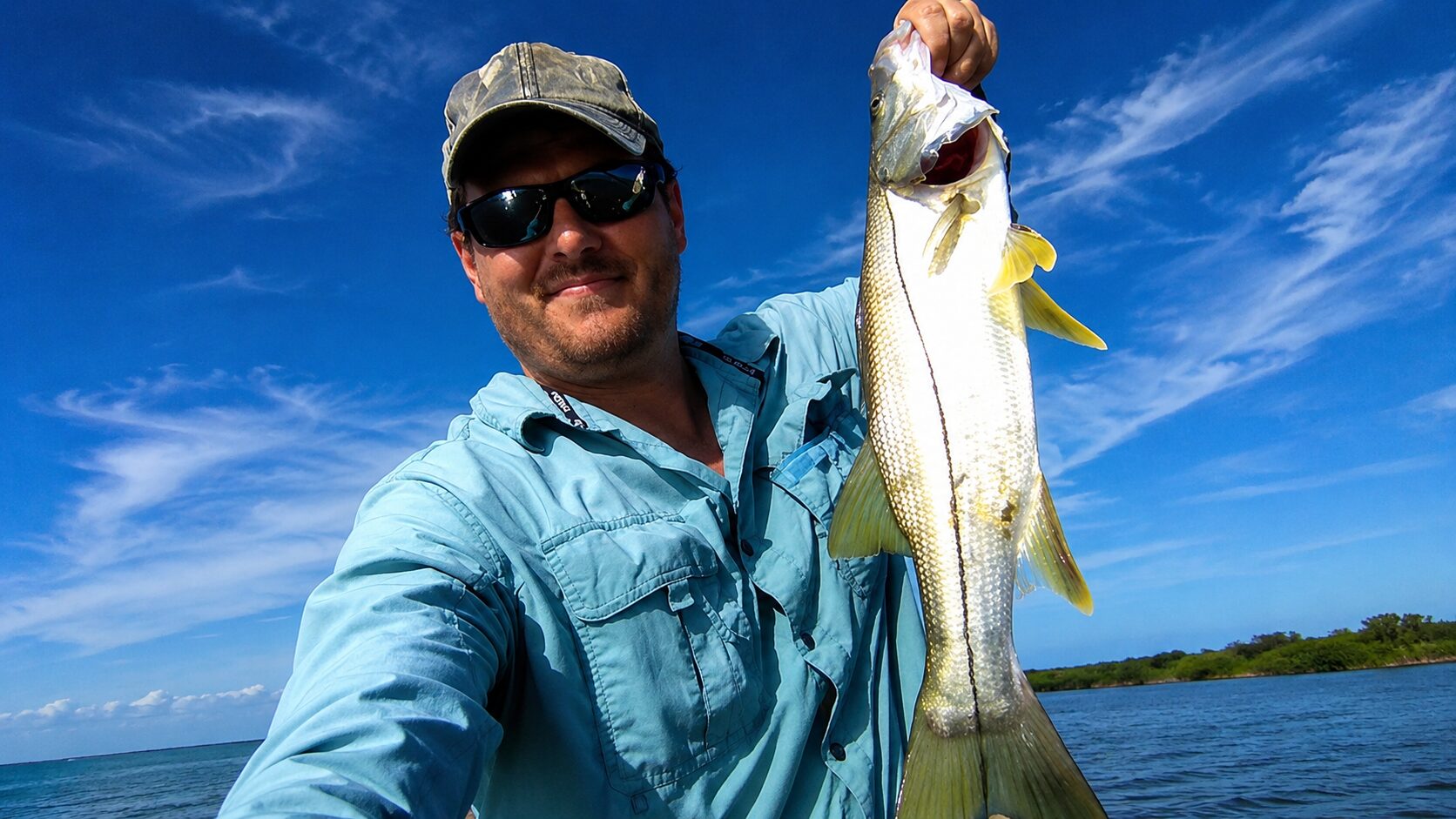
Daniel Hagan has been fishing Florida’s shores since 1985 and writing about it for more than 20 years. As Managing Editor of FloridaShoreFishing.com, he shares firsthand experience covering surf and pier fishing, tackle, techniques, and Florida’s coastal species.