Last Updated on September 17, 2026
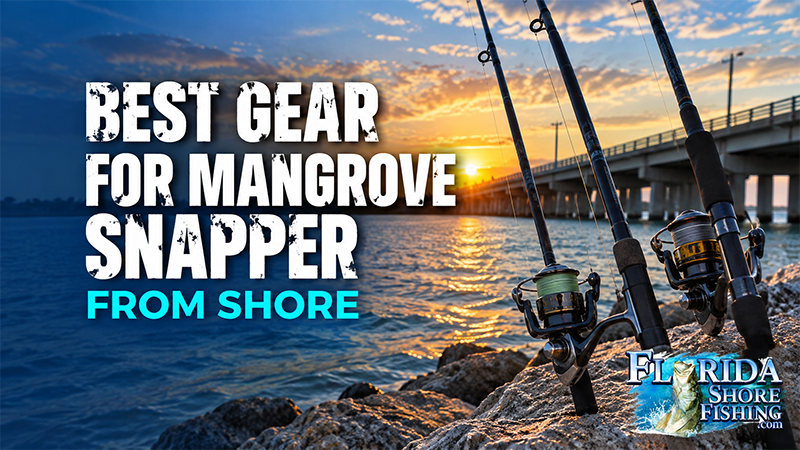
You don’t need heavy offshore tackle to catch Mangrove Snapper from Florida’s shores.
Most of the fish you’ll encounter around bridges, piers, docks, mangroves and other inshore structure can be handled with a relatively light spinning outfit. The challenge isn’t usually the size of the fish.
It’s the structure they’re living around.
Mangrove Snapper have a habit of grabbing a bait and immediately heading for the nearest piling, rock, oyster bed or mangrove root. That means your tackle needs to be light enough to present small natural baits without spooking fish, but strong enough to stop a snapper before it reaches cover.
For most situations, my favorite all-around setup is simple:
| Gear | Recommendation |
|---|---|
| Rod | 7′ medium-power, fast-action spinning rod |
| Reel | 3000-size spinning reel |
| Main Line | 15 lb braid |
| Leader | 15 lb fluorocarbon |
| Hook | 1/0 circle hook |
| Weight | Lightest weight necessary |
| Primary Rig | Carolina/Fish Finder or Knocker Rig |
That setup will handle most of the inshore Mangrove Snapper fishing you’re likely to encounter from shore.
For a broader look at finding and catching these fish, see our How to Catch Mangrove Snapper From Shore guide.
Best Rod for Mangrove Snapper
A 7-foot medium-power spinning rod with a fast action is my favorite all-around Mangrove Snapper rod.
You can certainly catch them on medium-light tackle, particularly around relatively open water. In fact, lighter equipment makes catching smaller inshore snapper a lot of fun.
The problem comes when the fish is sitting next to structure.
Once a Mangrove Snapper takes your bait, you may only have a few seconds to keep it away from a piling, rock or mangrove root.
That’s why I generally prefer medium power.
It gives you enough backbone to put pressure on the fish without requiring an oversized rod.
A fast-action tip also provides enough sensitivity to detect subtle bites while allowing you to fish relatively small live baits naturally.
Medium-Light vs. Medium
Both have their place.
Medium-light: Excellent around open water, lighter structure and smaller fish.
Medium: Better all-around choice for bridges, piers, docks and other areas where you need to turn a fish quickly.
If I were buying one rod specifically for inshore Mangrove Snapper fishing, I’d choose the 7-foot medium.
Best Reel for Mangrove Snapper
Pair that rod with a 3000-size spinning reel.
A 2500 reel is perfectly capable of handling most inshore Mangrove Snapper, especially when paired with 10-pound braid.
The 3000 gets my vote because it provides a little more line capacity and versatility while remaining small and light enough for comfortable inshore fishing.
You don’t normally need a big 5000- or 6000-size offshore reel.
Remember, we’re targeting inshore snapper, not 20-pound fish over an offshore reef.
A quality 3000 spinning reel with a smooth drag is more than enough for most situations.
Around exceptionally heavy bridge structure or larger fish, stepping up to a 4000 can make sense.
But for everyday shore fishing:
3000 is the sweet spot.
Best Fishing Line for Mangrove Snapper
I recommend 15-pound braided line for most situations.
Braid provides several advantages.
Its small diameter makes casting small baits easier, it has very little stretch, and it gives you excellent sensitivity.
That lack of stretch can be especially useful around structure because you can apply pressure quickly when a fish turns toward cover.
There isn’t one perfect line strength for every location.
10 lb Braid
Use 10-pound braid when fishing relatively open water or clear conditions where a lighter presentation is useful.
It’s plenty strong enough for the size of most inshore Mangrove Snapper.
15 lb Braid
This is my best all-around choice.
It provides a good balance between casting, sensitivity and strength.
20 lb Braid
Move up to 20-pound braid when fishing around bridge pilings, heavy rocks, oysters or other nasty structure.
The fish hasn’t suddenly become stronger.
You’re increasing the tackle because the environment has become more demanding.
Fluorocarbon Leader May Be the Most Important Part of Your Setup
If there’s one part of a Mangrove Snapper rig that deserves extra attention, it’s the leader.
Mangrove Snapper have excellent eyesight and can become extremely wary, particularly in clear water or heavily fished areas.
At the same time, they live around abrasive structure.
That’s a difficult combination.
Go too heavy and you may reduce your bites.
Go too light and the snapper may cut you off almost immediately.
I like to start with 15-pound fluorocarbon.
Then let the fish and conditions tell you what to do.
Not getting bites?
Drop to 12-pound fluorocarbon. In very clear water, you may even experiment with 10-pound.
Getting bites but losing fish to structure?
Move up to 20-pound fluorocarbon.
The goal isn’t to use the lightest leader possible.
It’s to use the lightest leader that still gives you a reasonable chance of landing the fish.
That’s an important distinction.
For more information about the fish itself, including its habitat and feeding behavior, see our Mangrove Snapper Fish Profile.
Best Hook Size for Mangrove Snapper
A 1/0 circle hook is my favorite starting point for inshore Mangrove Snapper.
It’s small enough for the baits we commonly use while still providing enough hook for a quality fish.
You can adjust from there.
#2 to #1: Small shrimp and small pieces of cut bait.
1/0: Mud minnows, shrimp and small baitfish.
2/0: Larger mud minnows, pilchards, small pinfish and finger mullet.
One of the biggest mistakes you can make is automatically reaching for a large hook because you’re fishing saltwater.
Mangrove Snapper have excellent eyesight, and most of the inshore fish we’re targeting aren’t particularly large.
Match your hook to your bait.
Our Best Baits for Mangrove Snapper From Shore guide covers the bait choices in much greater detail. Mud minnows are my first choice, followed by live shrimp, pilchards, small pinfish and finger mullet.
How Much Weight Should You Use?
As little as possible.
That’s probably the simplest way to describe Mangrove Snapper sinker selection.
The goal isn’t to pin your bait to the bottom with the biggest sinker you have.
You want enough weight to control the bait and put it in the strike zone while still allowing it to look natural.
In light current, that might mean no weight at all.
A little more current might require a split shot.
Strong current around a bridge may require an egg sinker.
Instead of starting with a specific sinker size, ask yourself:
What’s the lightest weight that will put my bait where the snapper are?
Start there.
Carolina or Fish Finder Rig
One of my longtime Mangrove Snapper setups is a simple Carolina-style rig.
The basic setup is:
Main line → egg sinker → bead → swivel → fluorocarbon leader → circle hook
A leader of roughly 12–20 inches is a good starting point.
The egg sinker should be just heavy enough to get the bait where you need it.
This rig works particularly well with mud minnows and other live baits around bridges, piers and docks.
The sliding sinker allows a fish to pick up the bait without immediately feeling the full resistance of the weight.
It’s simple, inexpensive and effective.
Knocker Rig
A knocker rig is another excellent option around heavy structure.
Instead of stopping above a swivel, the sliding egg sinker moves all the way down to the hook.
That creates a compact presentation that gets your bait down quickly.
It’s particularly useful when fishing vertically around bridge and pier pilings or when you need to keep the bait close to structure.
There’s also less leader and terminal tackle hanging around the bottom, which can help in areas where snagging is a constant problem.
Don’t Forget About Free-Lining
Sometimes the best rig is barely a rig at all.
If the current and water depth allow it, try fishing a live mud minnow, shrimp or small baitfish with no sinker.
Let the current do the work.
Cast slightly up-current and allow the bait to drift naturally toward the structure.
A free-lined live bait behaves much more naturally than one anchored beneath a heavy sinker.
If you can’t control the bait, add a small split shot.
Keep increasing weight only until you can get the bait into the strike zone.
Adjust Your Gear to the Structure
Instead of thinking that every Mangrove Snapper requires the same tackle, adjust your setup to where you’re fishing.
Open Water and Light Structure
Try:
- 7′ medium-light rod
- 2500 reel
- 10 lb braid
- 10–12 lb fluorocarbon
- #1 to 1/0 circle hook
This gives you a light, natural presentation and makes smaller snapper fun to catch.
General Shore Fishing
My all-around setup:
- 7′ medium rod
- 3000 reel
- 15 lb braid
- 15 lb fluorocarbon
- 1/0 circle hook
This is where I’d start at most Florida piers, docks, seawalls and bridges.
Heavy Bridge and Piling Structure
Step things up:
- 7′ medium rod
- 3000–4000 reel
- 20 lb braid
- 20 lb fluorocarbon
- 1/0–2/0 circle hook
The heavier tackle isn’t necessarily for a bigger fish.
It’s about preventing an average-sized Mangrove Snapper from reaching barnacles, concrete, rocks or pilings before you can turn it.
Keep Your Mangrove Snapper Gear Simple
Mangrove Snapper fishing doesn’t require a complicated tackle box.
If I were heading to a Florida bridge or pier specifically to target them, I’d be comfortable carrying a 7-foot medium spinning rod, 3000 reel loaded with 15-pound braid, a small spool of 15-pound fluorocarbon, 1/0 circle hooks, swivels and a selection of small egg sinkers and split shots.
Add a bucket of medium mud minnows and I’d have a lot of confidence in that setup.
The trick is knowing when to change it.
If the fish are leader-shy, go lighter.
If they’re breaking you off, go heavier.
If the bait isn’t reaching the fish, add a little weight.
If the bait looks unnatural, remove some.
Mangrove Snapper fishing from shore is often a balancing act between finesse and strength.
Keep the presentation small and natural, but make sure you have enough equipment to turn the fish when it heads for cover.
Get that balance right, and you have everything you need to catch Mangrove Snapper from Florida’s shores.

Author: Daniel Hagan
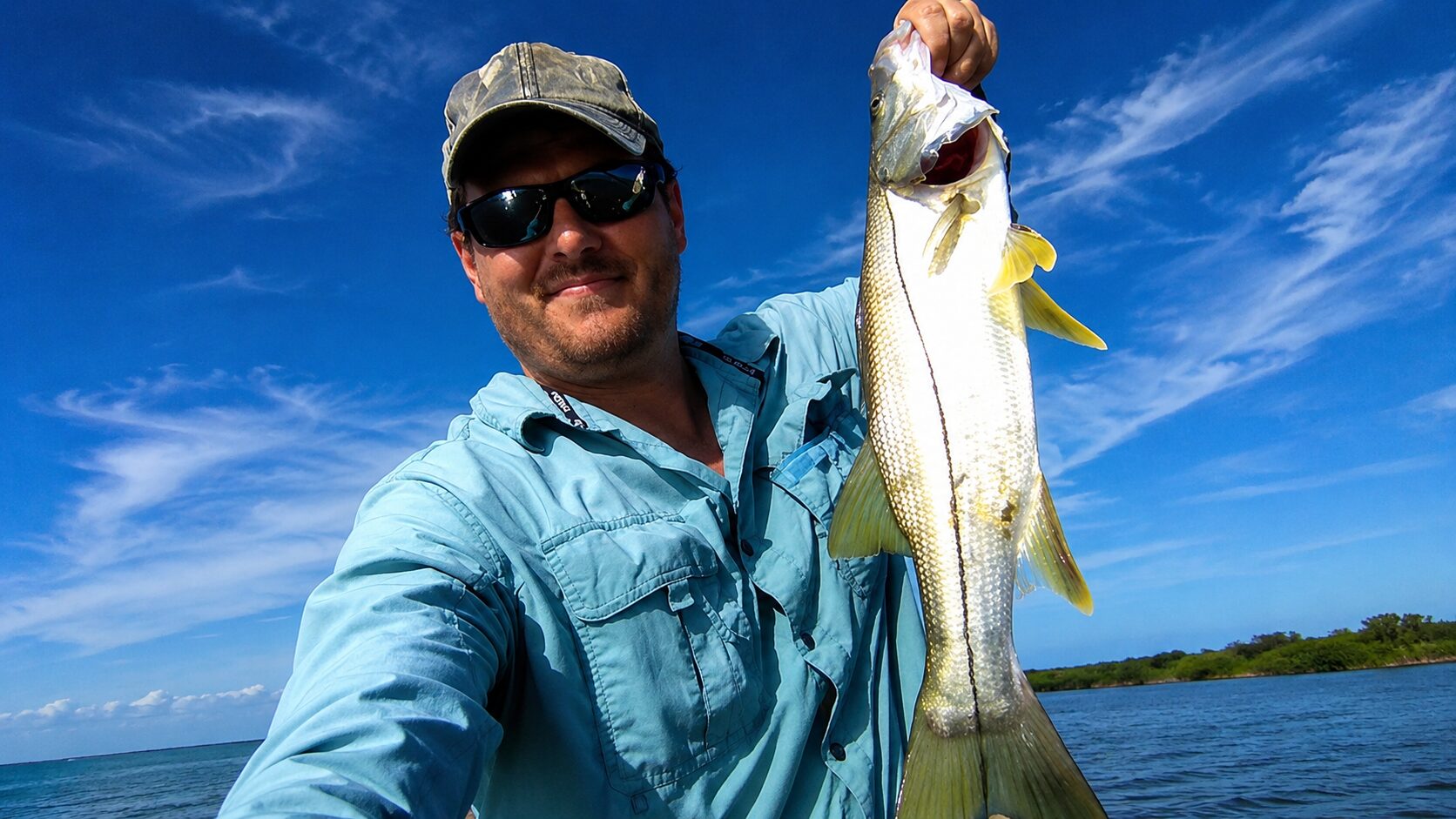
Daniel Hagan has been fishing Florida’s shores since 1985 and writing about it for more than 20 years. As Managing Editor of FloridaShoreFishing.com, he shares firsthand experience covering surf and pier fishing, tackle, techniques, and Florida’s coastal species.
Daniel Hagan has been fishing Florida’s shores since 1985 and writing about it for more than 20 years. As Managing Editor of FloridaShoreFishing.com, he shares firsthand experience covering surf and pier fishing, tackle, techniques, and Florida’s coastal species.