
Last Updated on August 21, 2026
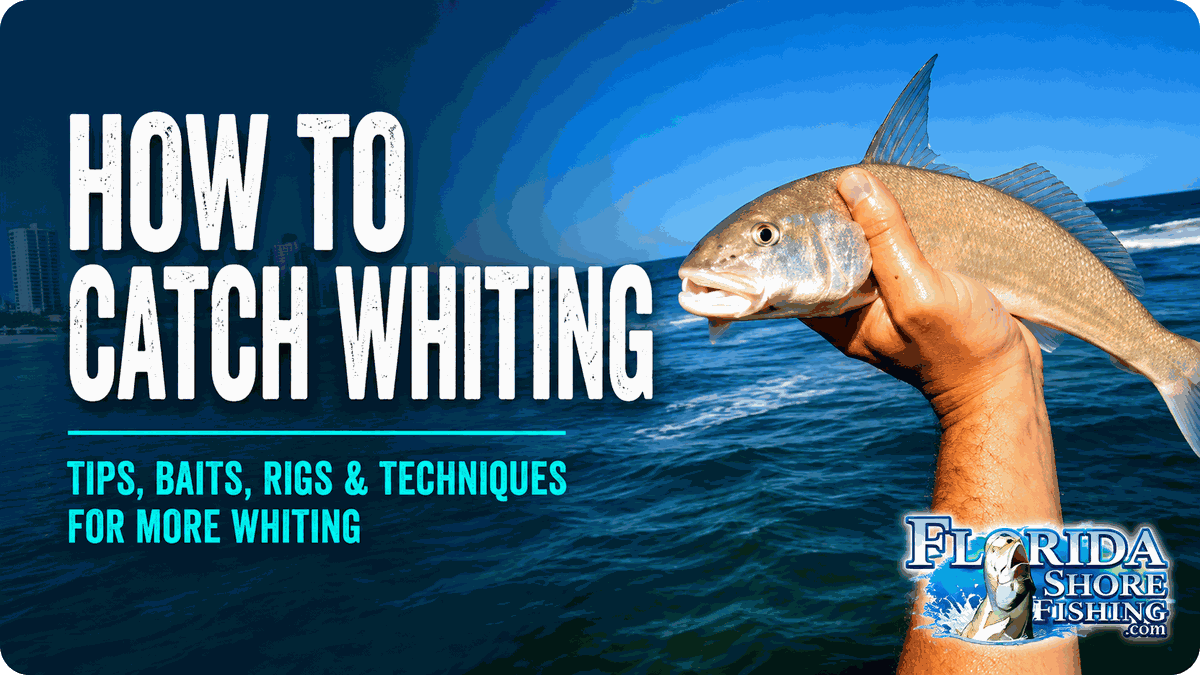
Whiting (Menticirrhus littoralis), commonly known as Southern Kingfish, are one of the most popular and abundant surf fish found along the Atlantic and Gulf coasts. Most whiting weigh less than a pound, although larger fish approaching two pounds are occasionally caught. They are easily identified by their silver coloration, flattened undersides, and distinctive barbels (whisker-like appendages) located beneath their mouths, which help them locate food buried in sandy bottoms.
Despite their relatively small size, whiting are highly prized among anglers. Their abundance, willingness to bite, and excellent table fare make them a favorite target for beach fishermen. While they are not known for making long, powerful runs, they put up a surprisingly spirited fight on light tackle.
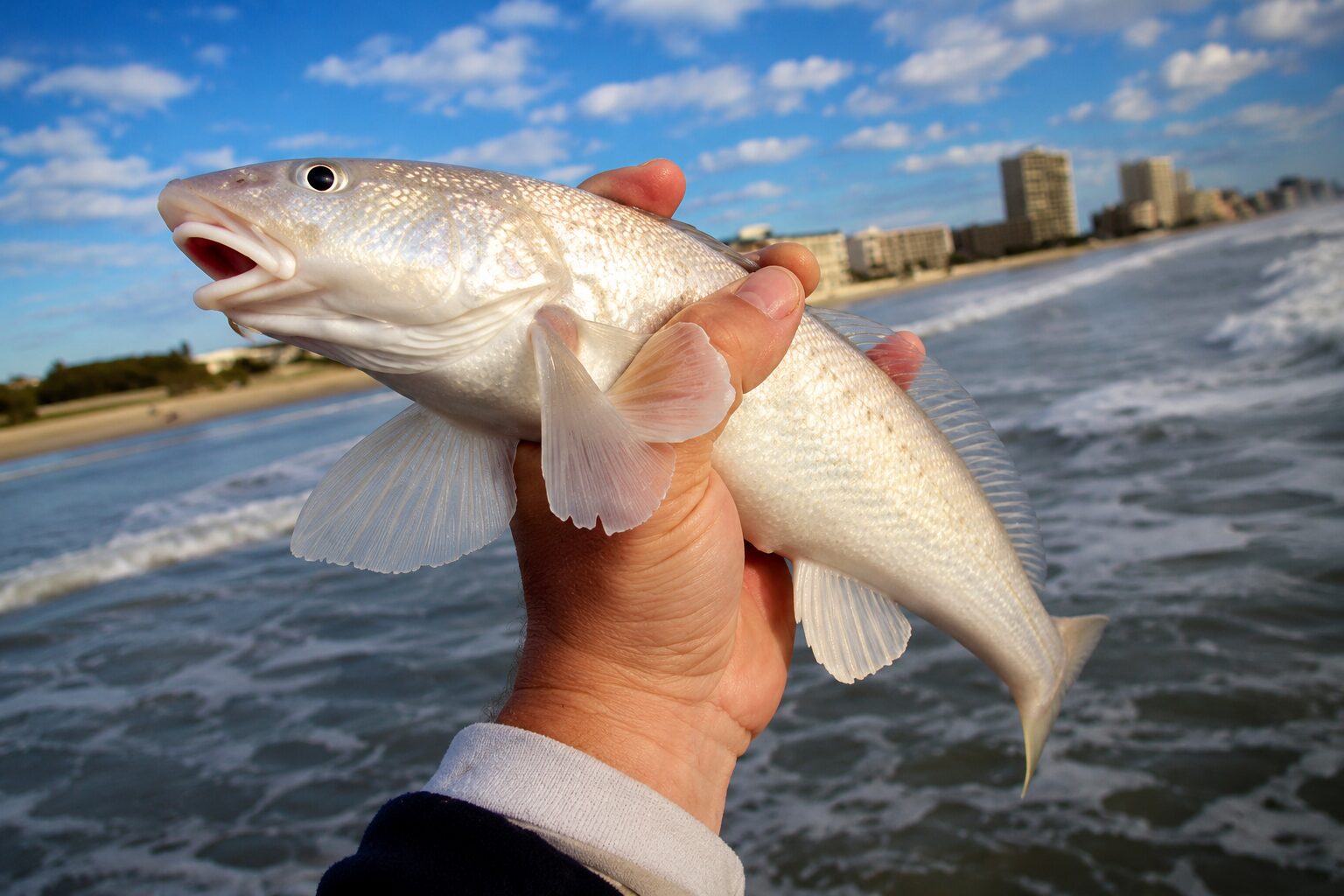
Where to Find Whiting
Whiting are most commonly found in the surf zone along sandy beaches. They typically position themselves just behind breaking waves, where wave action uncovers crabs, shrimp, clams, and other food sources hidden in the sand.
One of their favorite meals is the sand flea (also known as a mole crab). If you notice sand fleas along the beach, there is a good chance whiting are feeding nearby.
Although surf fishing for whiting is the most productive method, whiting can also be found around:
- Inlets
- Passes
- Bays
- Tidal channels
- Sand flats near deeper water
These fish often travel in schools, so when one is caught, there are usually more in the area.
Recommended Gear
Whiting are not large fish, so almost any saltwater-rated rod and reel combination can handle them. However, because they are frequently feeding beyond the first set of breaking waves, longer rods are often necessary to achieve the casting distance required from the beach.
For surf fishing, a longer surf rod paired with a spinning reel is ideal. When fishing from piers, docks, or jetties, a medium-action spinning setup is often the most versatile choice.
Many anglers intentionally use slightly heavier gear than necessary because the same areas that hold whiting frequently produce larger species such as black drum, redfish, pompano, and even small sharks.
Best Fishing Line
Braided line is one of the best choices for targeting whiting, especially in the surf. Its small diameter allows for longer casts while minimizing the effects of wind, waves, and current.
The primary drawback of braid is its visibility underwater. To overcome this, anglers should always use a fluorocarbon or monofilament leader. Both work well for whiting.
A leader in the 10–15 lb test range provides more than enough strength for whiting while still offering the durability needed if a larger fish takes the bait.
Hook Selection
Whiting have relatively small, downward-facing mouths designed for feeding on the bottom. Their bites can range from aggressive strikes to subtle taps that are barely noticeable.
For this reason, circle hooks are an excellent choice.
Recommended hook sizes include:
- #2
- #1
- 1/0
- 2/0
Most anglers find that #1 and 1/0 circle hooks produce the best results.
Because circle hooks are designed to rotate and catch in the corner of the fish’s mouth, they significantly reduce deep-hooking and often hook fish automatically.
Important Circle Hook Tip
When using circle hooks, avoid setting the hook with a sharp upward jerk.
Instead, when you feel a bite:
- Slowly raise the rod tip.
- Begin reeling steadily.
- Allow the hook to rotate and set itself.
A traditional hookset will often pull the bait away from the fish before the hook has a chance to engage.
Best Rigs for Whiting
Two rigs consistently outperform others when targeting whiting in the surf:
Fish Finder Rig
The fish finder rig consists of:
- A hook attached to a 12–20 inch leader
- A barrel swivel
- A bead
- An egg sinker sliding above the swivel
This rig allows fish to pick up the bait without immediately feeling resistance from the sinker.
Use only enough weight to maintain bottom contact and keep your bait in the strike zone.
Double Dropper Loop Rig
The double dropper loop rig features a sinker at the bottom with two hooks attached on loops positioned approximately 8–12 inches apart above the weight.
Benefits of this rig include:
- Presenting multiple baits at once
- Quickly determining the preferred bait of the day
- Covering multiple depths near the bottom
- The opportunity to catch more than one fish at a time
During strong whiting runs, catching two fish on a single cast is not uncommon.
Best Baits for Whiting
Whiting feed primarily on crustaceans and other small organisms uncovered by wave action. Their diet consists largely of:
- Crabs
- Shrimp
- Clams
- Sand fleas
- Small shellfish
(see our full best baits for whiting article)
The Best Bait: Sand Fleas
Sand fleas are widely considered the number one bait for whiting. These small crustaceans live in the wet sand along the shoreline and can often be located by looking for their characteristic V-shaped ripples in the receding surf.
Sand fleas can be collected with a sand flea rake or purchased from some bait shops.
Hook sand fleas through the soft underside and out through the shell to keep them secure while releasing scent into the water.
Other Productive Baits
Additional proven whiting baits include:
- Live shrimp
- Fresh peeled shrimp
- Cut clams
- Oysters
- Small crabs
When using shrimp, clams, or oysters, keep bait pieces small enough to fit comfortably into a whiting’s mouth. Thread the bait securely onto the hook while leaving the hook point exposed for better hookups.
Although whiting occasionally strike artificial lures such as small jigs or scented soft plastics, natural bait remains far more effective and is the preferred method among most anglers. Both live and frozen baits can be effective.
Surf Fishing Techniques
One of the keys to consistently catching whiting is learning to read the beach.
Look for areas where two sets of waves are breaking. The outer break typically occurs over a sandbar, while the inner break is closer to shore. Between these two areas lies a deeper trough, which is often the most productive location for whiting.
After locating a trough:
- Cast into the deeper water between the breaks.
- Use enough weight to hold your rig in place.
- Keep your bait positioned within the trough.
If strong current requires more than 3 ounces of weight, consider switching to a Sputnik sinker. Its wire arms dig into the sand and prevent the rig from drifting.
On beaches with only a single visible break, cast just beyond the breaking waves where feeding fish are often concentrated.
A popular strategy is to fish two different baits simultaneously. For example:
- Bottom hook: Sand flea
- Top hook: Peeled shrimp or clam
Once you determine which bait is producing the most bites, switch both hooks to that bait to maximize your catch rate.
Tips and Tricks
- Fresh peeled shrimp often outfishes live shrimp because whiting rely heavily on scent when feeding.
- If you plan to keep your catch, soaking the fillets in milk for about an hour can help reduce any strong iodine flavor.
- Investing in a sand flea rake can provide a virtually unlimited supply of one of the best natural baits available.
- Pay close attention to tide changes, as moving water often increases feeding activity.
- When you catch one whiting, continue fishing the area thoroughly—schools of fish are often nearby.
Final Thoughts
Whiting are one of the most accessible and rewarding species available to shore anglers. Their abundance, excellent table quality, and willingness to bite make them a perfect target for both beginners and experienced fishermen alike.
By focusing on productive surf structures, using natural baits such as sand fleas and shrimp, and presenting them with proven rigs like the fish finder or double dropper loop, you’ll dramatically increase your chances of success and enjoy some of the best surf fishing opportunities available along the coast.
Related Links
Daniel Hagan has been fishing Florida’s shores since 1985 and writing about it for more than 20 years. As Managing Editor of FloridaShoreFishing.com, he shares firsthand experience covering surf and pier fishing, tackle, techniques, and Florida’s coastal species.